About the Object
The Gejje Thand is a sacred ceremonial staff of the Kodava people. It is traditionally associated with an Okka and is carried by male members during important rituals, ceremonies, spirit-possession rituals and certain life-cycle events.
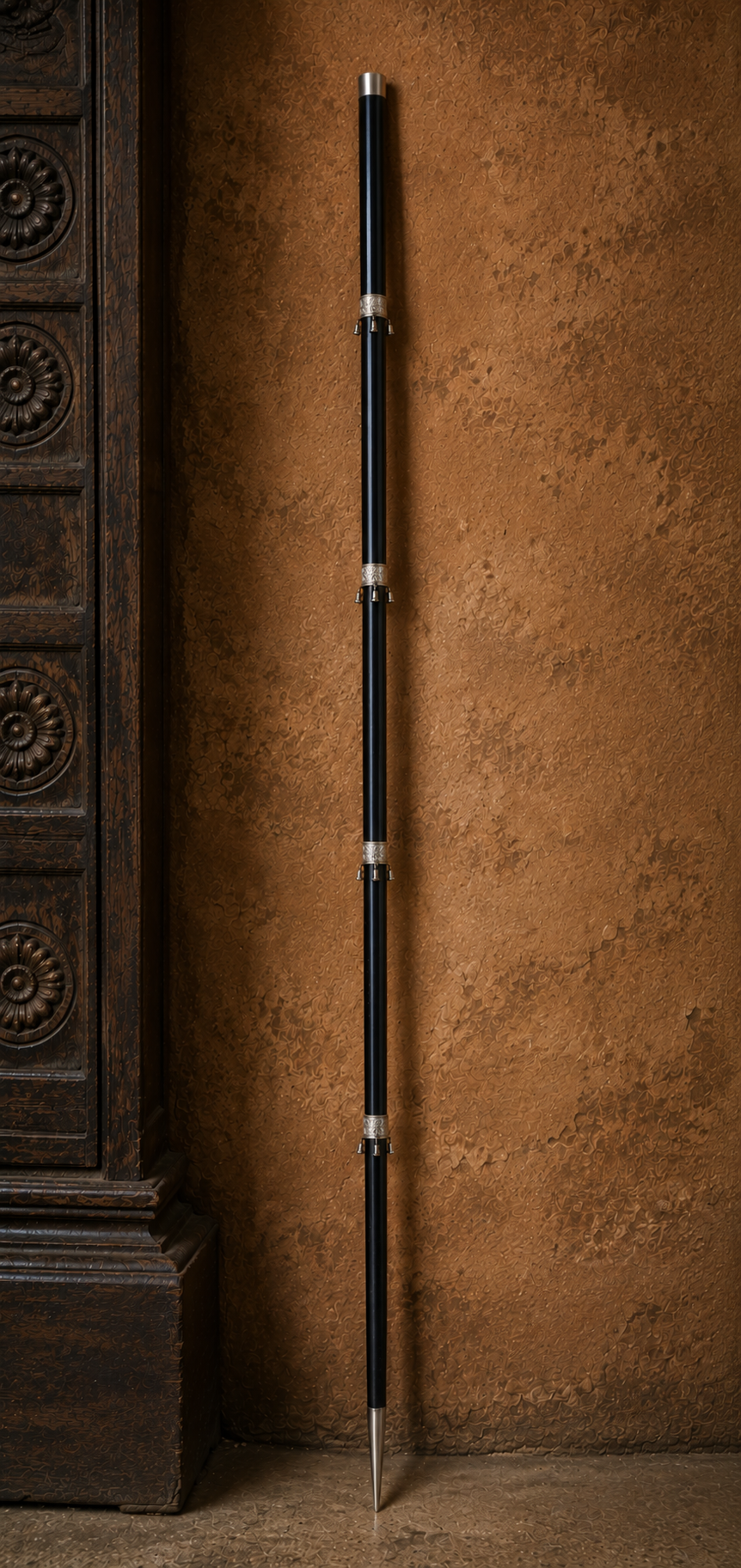
Gejje Thand is a sacred wooden staff traditionally made from Kari Mara (ebony) and decorated with multiple silver bands known as Bolli Murr. Its upper portion is adorned with Gejje, or small silver bells. The staff is regarded as a sacred object and is handled in ritual contexts
How It Was Used
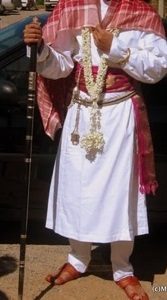
Traditional use: The Gejje Thand is held by male members of the Okka during major ceremonial occasions, spirit-possession rituals, ancestral invocation and life-cycle events. It also has an important role in traditional Kodava marriage ceremonies, where the groom carries the staff.
The Gejje Thand was traditionally passed down from the father to his eldest son on the son’s wedding day. It was considered an important hereditary possession connecting the son to his family lineage and ancestral tradition.
The next son, on his marriage, would have a new Gejje Thand made for him, rather than inheriting the staff already passed to the elder son.
When a Gejje Thand was inherited, the name of the person taking possession of the staff was engraved on a silver band called a Muru. The Muru therefore serves as a physical record of the succession and helps preserve the history of the staff and its lineage
Cultural significance: According to Kodava oral tradition, Lord Maheshwara (Shiva) bestowed the Gejje Thand upon the Kodavas. It is believed to have been carved from his trident and given as a symbol of authority and protection. The same tradition associates Shiva with the granting of the Dudi, the ritual drum.
The Gejje Thand represents authority, sanctity, protection and ancestral continuity. Its association with the Okka and its hereditary transmission make it an important physical symbol of family identity and lineage
Historical context: The Gejje Thand belongs to the traditional ritual culture of Kodagu, where the Okka, Ainmane and ancestral traditions form an important part of Kodava social organisation. The staff continues to connect present generations with ancestral and ritual practices.
The Tradition Today
Reason for decline: The source does not record a specific decline or extinction of the Gejje Thand tradition. Instead, it describes the staff as continuing to have ceremonial, ancestral and marriage-related significance
Revival efforts: Rather than treating Gejje Thand as a tradition that needs revival, the priority should be preservation and documentation of the living tradition.