About the Object
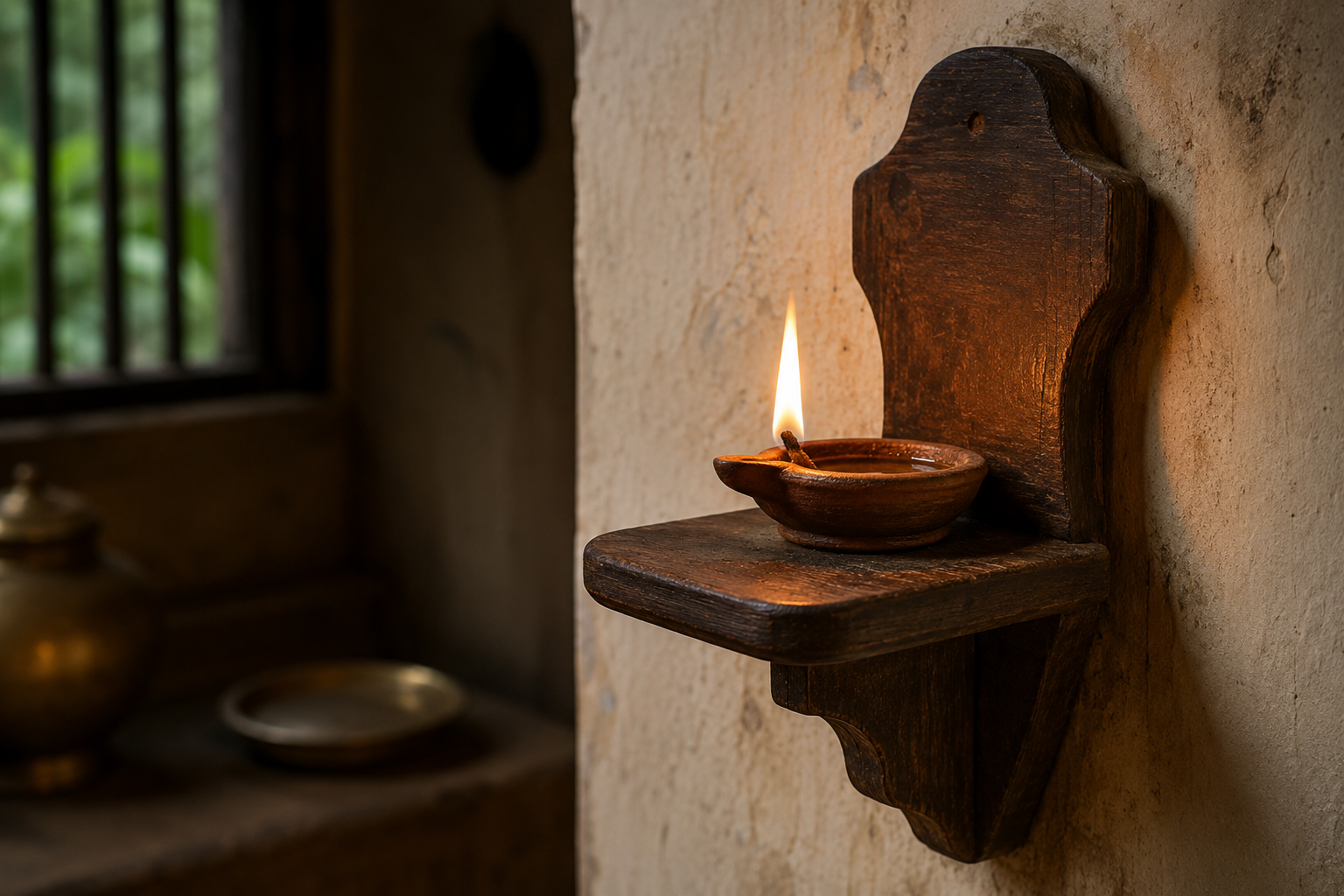
Bolcha Paarr is a traditional wooden holder made to house a small lamp.
Bolcha Paarr is a traditional wooden holder made to house a small lamp. It was generally fixed to the wall and formed part of the traditional lighting arrangements of Kodava homes. Its simple wooden construction reflects the practical craftsmanship of the traditional household.
Before modern electrical lighting became part of everyday domestic life, lamps were an essential feature of the traditional Kodava home. Bolcha Paarr provided a designated and convenient place for a small lamp, keeping the flame elevated and the light positioned where it could illuminate the surrounding space.
Made from wood, the Bolcha Paarr was generally attached directly to a wall. Its construction was functional but could also be adapted to the architecture of the house. The surviving forms include simple holders as well as corner varieties, showing how the object could be incorporated into different parts of a traditional dwelling.
The object is therefore an important part of the material culture of the traditional Kodava home, representing the relationship between household architecture, traditional lighting and locally available craftsmanship
How It Was Used
Traditional use: Being fixed to the wall allowed the lamp to remain securely positioned while providing light to the surrounding area. It was particularly suited to traditional houses where lighting arrangements were integrated into the architecture.
Cultural significance: Bolcha Paarr represents the traditional culture of lighting the Kodava home.
The object demonstrates how even a basic household requirement such as lighting was accommodated through objects integrated into the architecture. Rather than being a separate modern fixture, the lamp holder became part of the wall and living environmen
Historical context: The documented period of use extends to the time before and during the reign of the Kodagu Rajas and the period of British rule.
Its continued presence in old houses and ainmanes provides a glimpse into the lighting arrangements of earlier Kodava households
Material & Making
Wood
The most distinctive feature of Bolcha Paarr is its integration of a simple wooden lamp support with the architecture of the house.
Its craftsmanship lies in creating a stable, appropriately shaped wooden piece that could securely hold a lamp while remaining attached to the wall.
The existence of small, medium and corner forms also demonstrates practical adaptation to different architectural spaces
Who Used It? / Where? / When?
OwnershipNot yet recorded
Period
Pre-colonial
Status of traditionDeclining
The Tradition Today
Reason for decline: The traditional wooden Bolcha Paarr declined as household lighting and furnishing materials changed.
The Kodagu Heritage record notes that although some variants remain in old houses, the object has been largely replaced in modern houses by contemporary materials such as steel, brass and glass.
The transition from traditional lamp arrangements to modern lighting further reduced the everyday need for such dedicated wooden lamp holders
Revival efforts: A few variants of Bolcha Paarr continue to survive in some old houses, making it a living remnant of the traditional household environment.
Collectors also preserve examples, helping retain the physical memory of the object even though its original everyday function has largely disappeared.