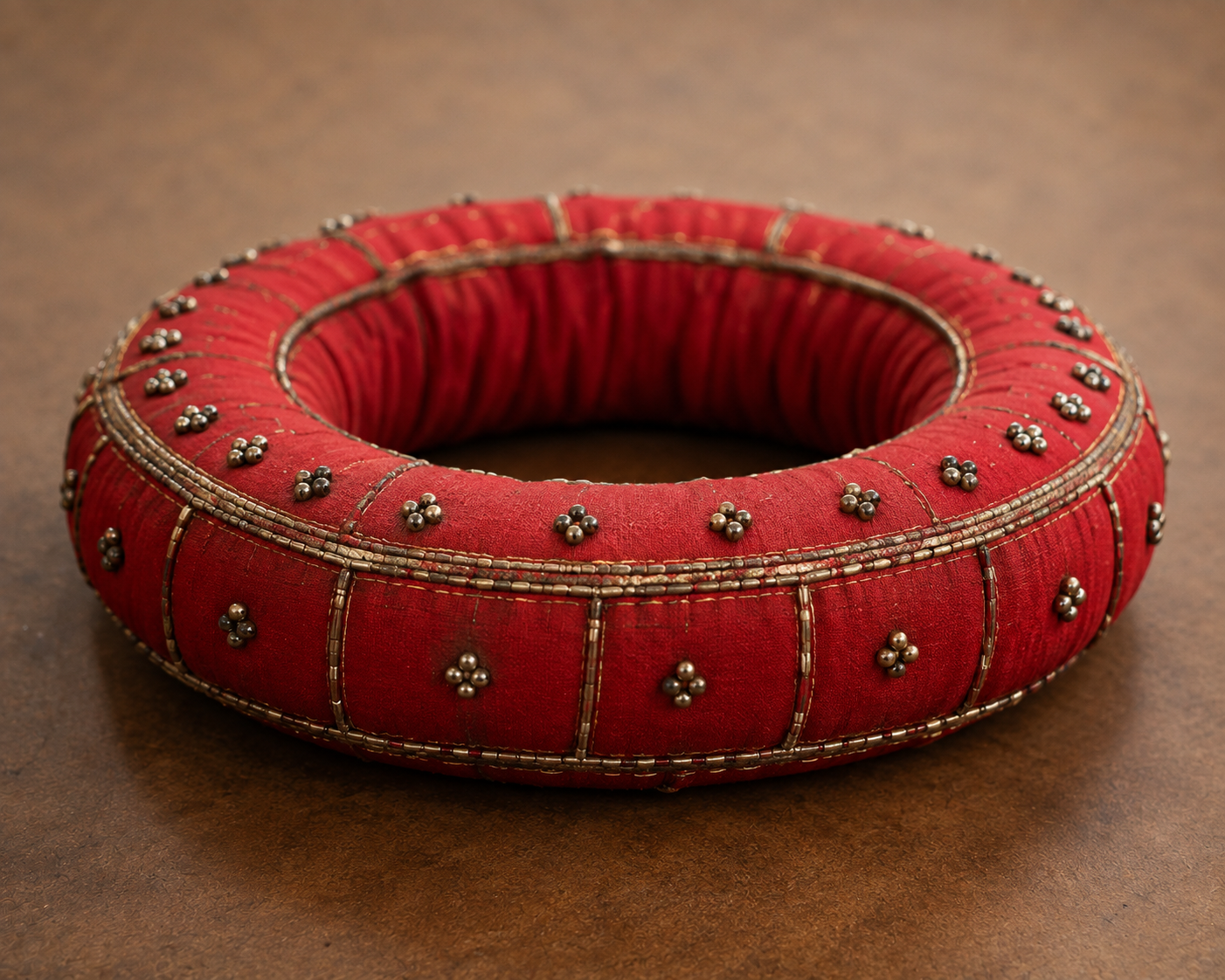
About the Object
A large, wide-mouthed household basin traditionally made of brass and used for various domestic purposes in Kodava households.
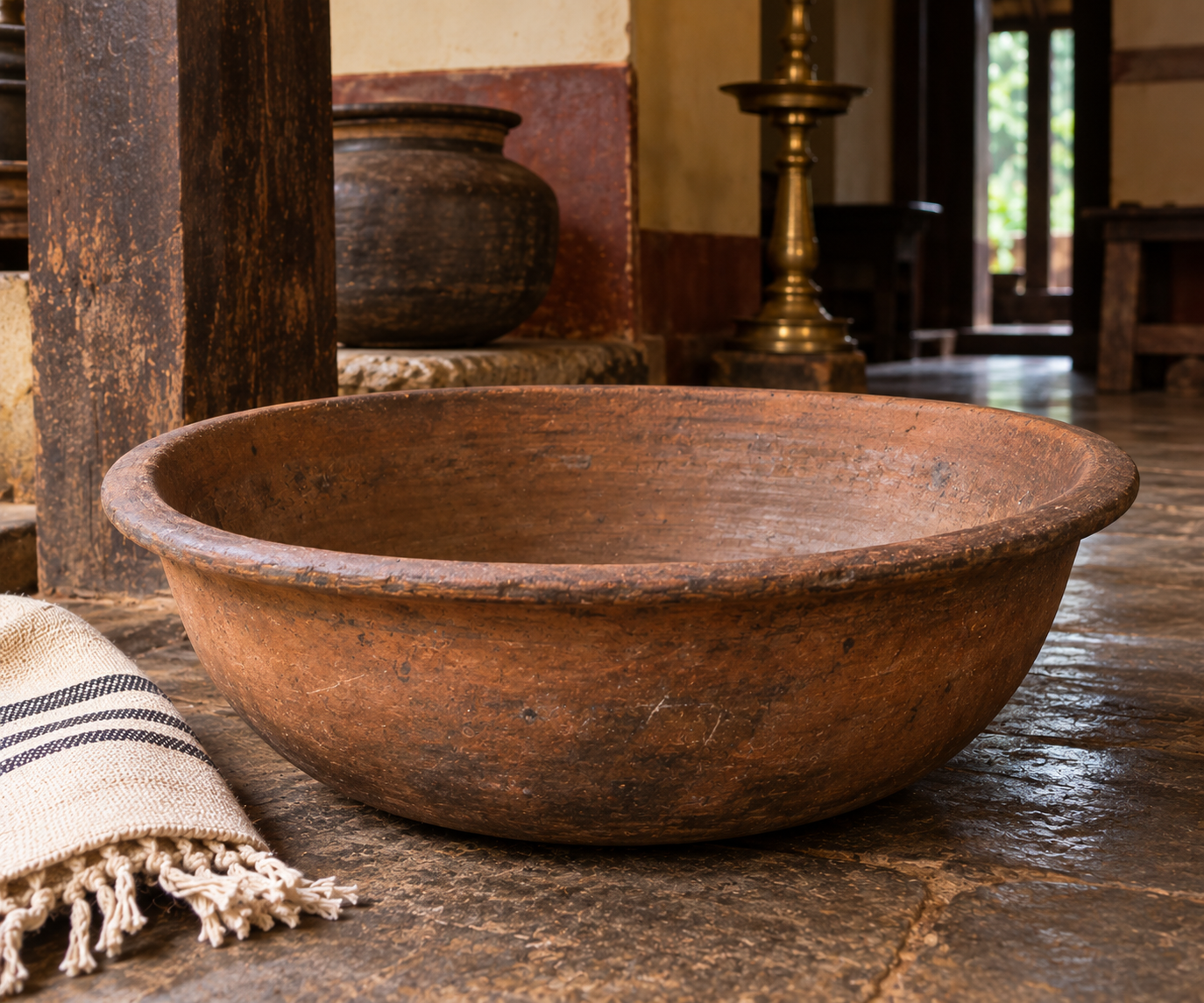
The Bogani is a large, broad and relatively shallow household basin traditionally made of brass. Its wide circular form and open top made it suitable for handling, washing, soaking and holding various household items.
The basin is a practical example of traditional metalware found in Kodava homes, where durable brass vessels were valued for repeated everyday use. Its substantial size allowed it to serve purposes that required a larger open vessel.
How It Was Used
Traditional use: Primarily associated with the traditional Kodava household, particularly domestic and utility areas where washing, cleaning and other household activities were carried out.
The Bogani was traditionally kept for household use, particularly where a large, stable basin was required.
It was especially useful for elders and patients who had difficulty moving around the house, including during the night.
During the monsoon, when movement outside the house was more difficult because of rain and wet surroundings, the Bogani became particularly useful.
Its large capacity and broad, stable form made it convenient for use beside the sleeping or resting area when required.
The vessel therefore served not only as a general household basin but also as a practical aid for caring for elders and those who were unwell
Cultural significance: The Bogani represents the practical side of traditional Kodava domestic life. Large metal vessels were part of a household's working collection and were valued because one durable vessel could serve several purposes over many years.
Historical context: The Bogani belongs to the tradition of large household vessels used for practical domestic activities. It is possible that earlier forms of such large basins were made from locally available materials such as clay, as earthen vessels were traditionally used for many household purposes. However, large clay vessels could be relatively fragile and difficult to handle, particularly when moved or used frequently.
With the wider use of brass and other metals, households gained vessels that were stronger, more durable and easier to handle and maintain. Their longer working life and the possibility of repairing or replacing them made metal basins increasingly practical for regular household use.
Thus, the Bogani may represent an evolution in household vessel-making—from fragile earthen forms to more durable metal vessels, reflecting changes in material availability, household needs and traditional craftsmanship
The Tradition Today
Reason for decline: The decline in regular use is associated with the availability of lightweight modern household vessels, changing domestic practices and reduced dependence on traditional brassware.
The Bogani gradually declined as modern sanitation and bathing facilities became more accessible, reducing the need for a large household basin. Its earlier use was particularly valuable for elders and patients, who could use it conveniently for ablutions without having to move far, especially at night or during the monsoon. Modern bathrooms and easier access to water have largely replaced this traditional household practice.
Revival efforts: Traditional brass vessels can continue to be preserved as family heirlooms and displayed as part of the material heritage of Kodava households. Recording objects such as the Bogani helps document the practical knowledge and domestic culture associated with them.