About the Object
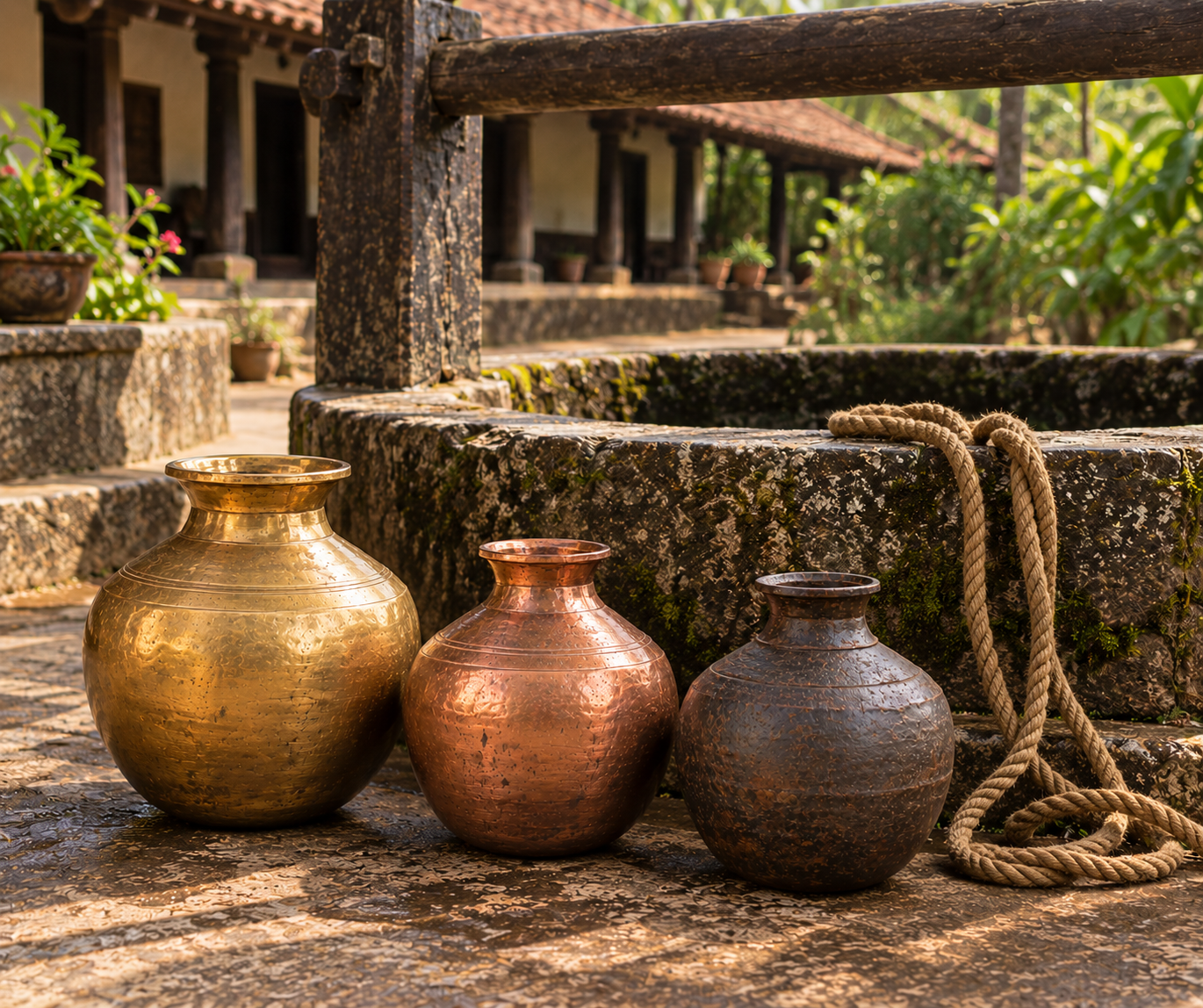
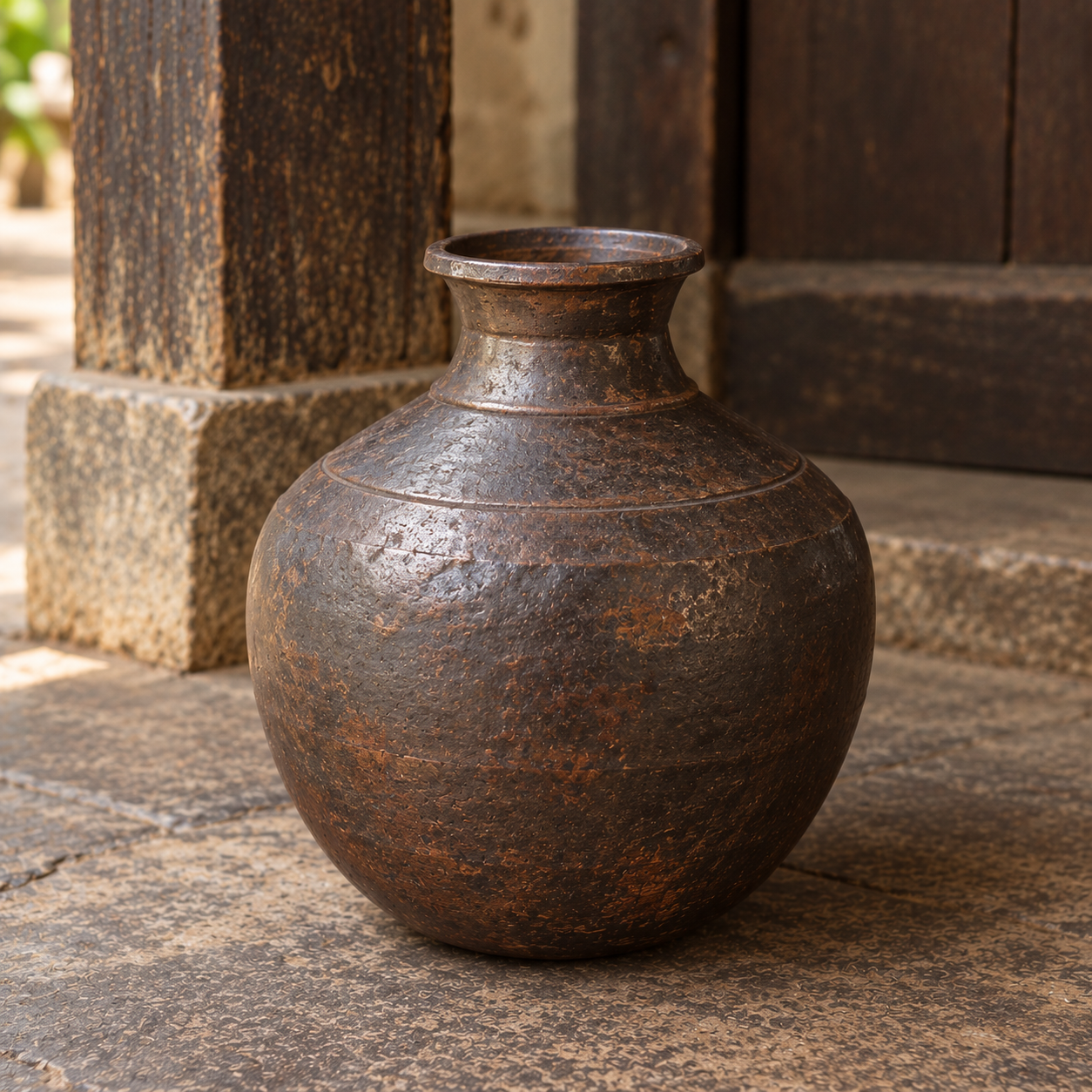
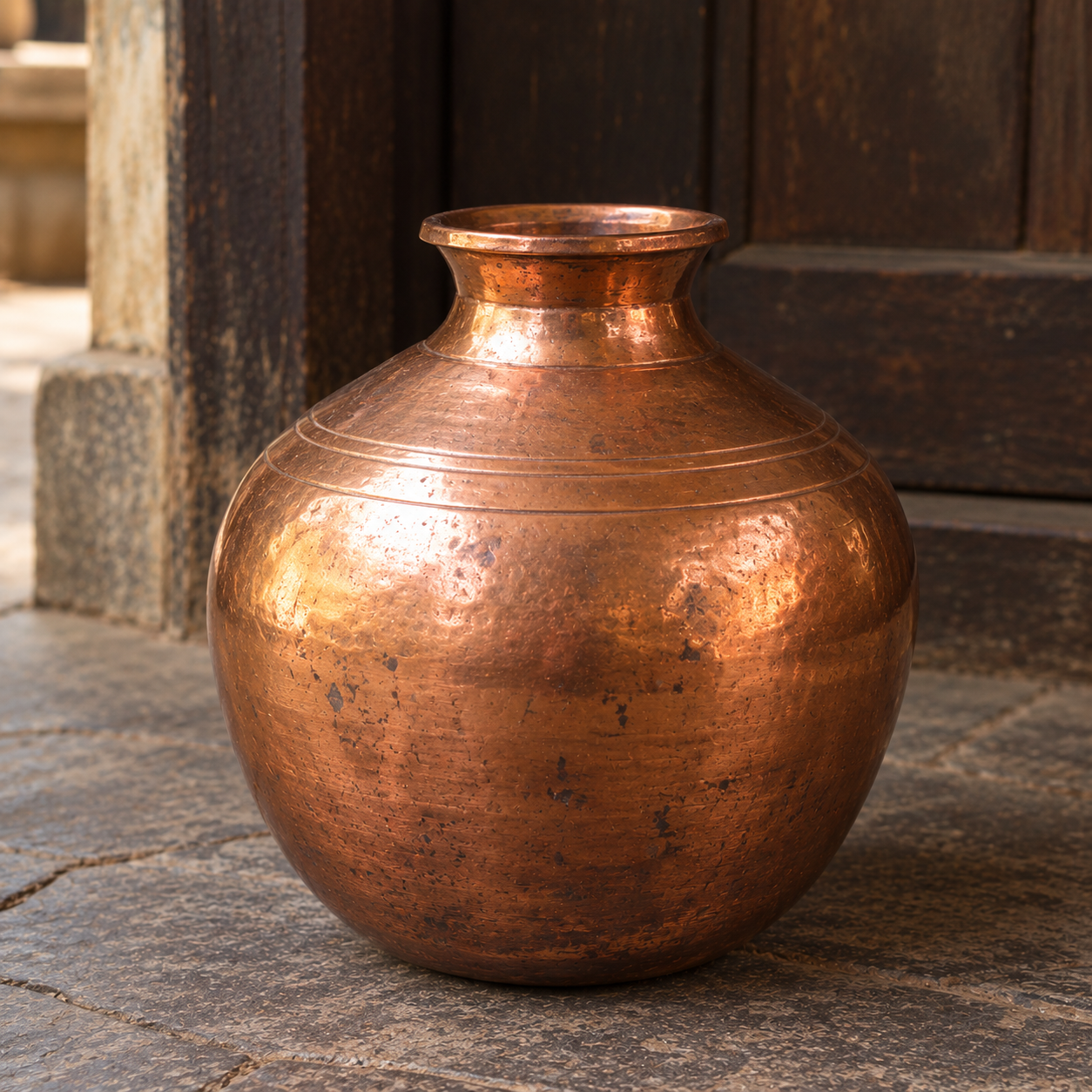
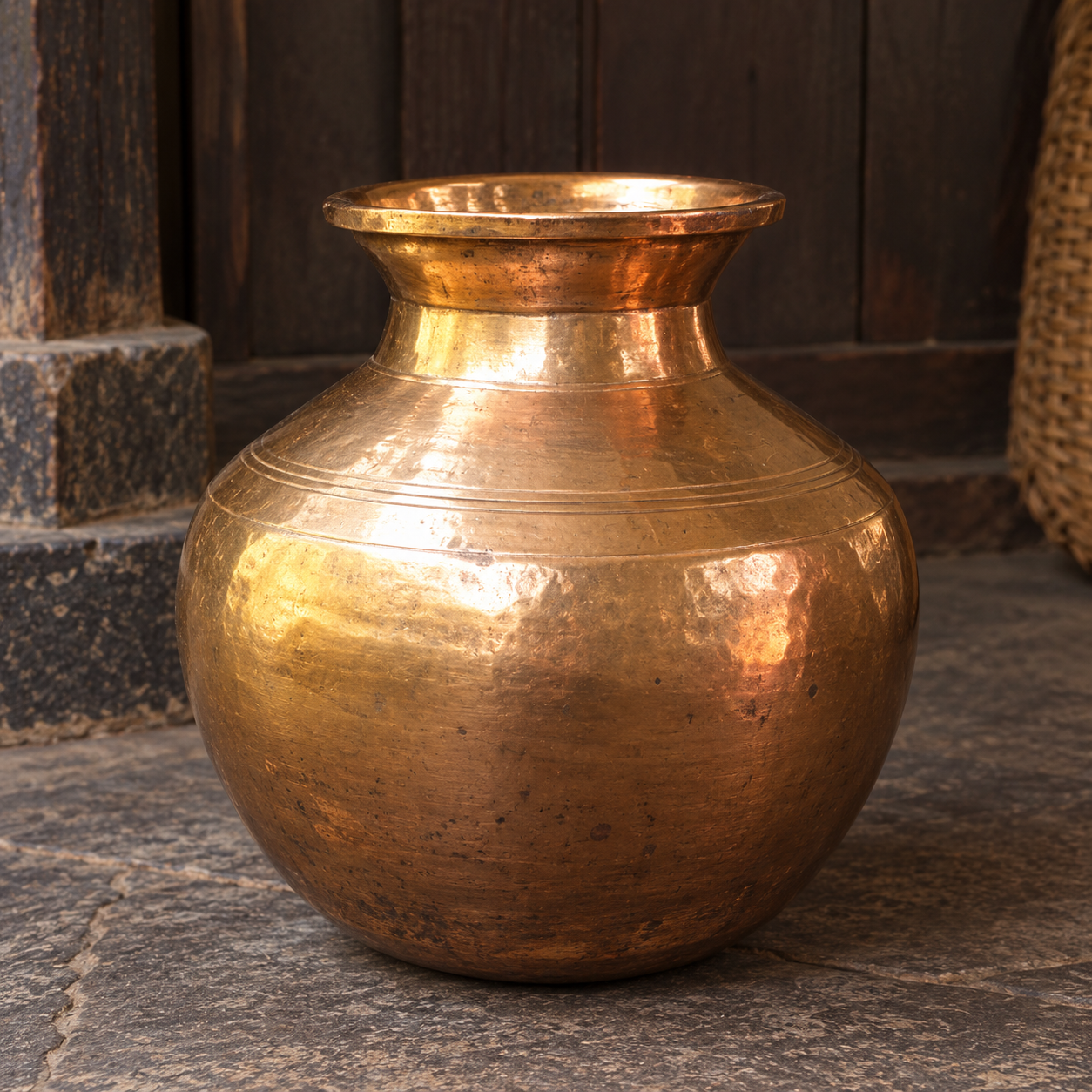
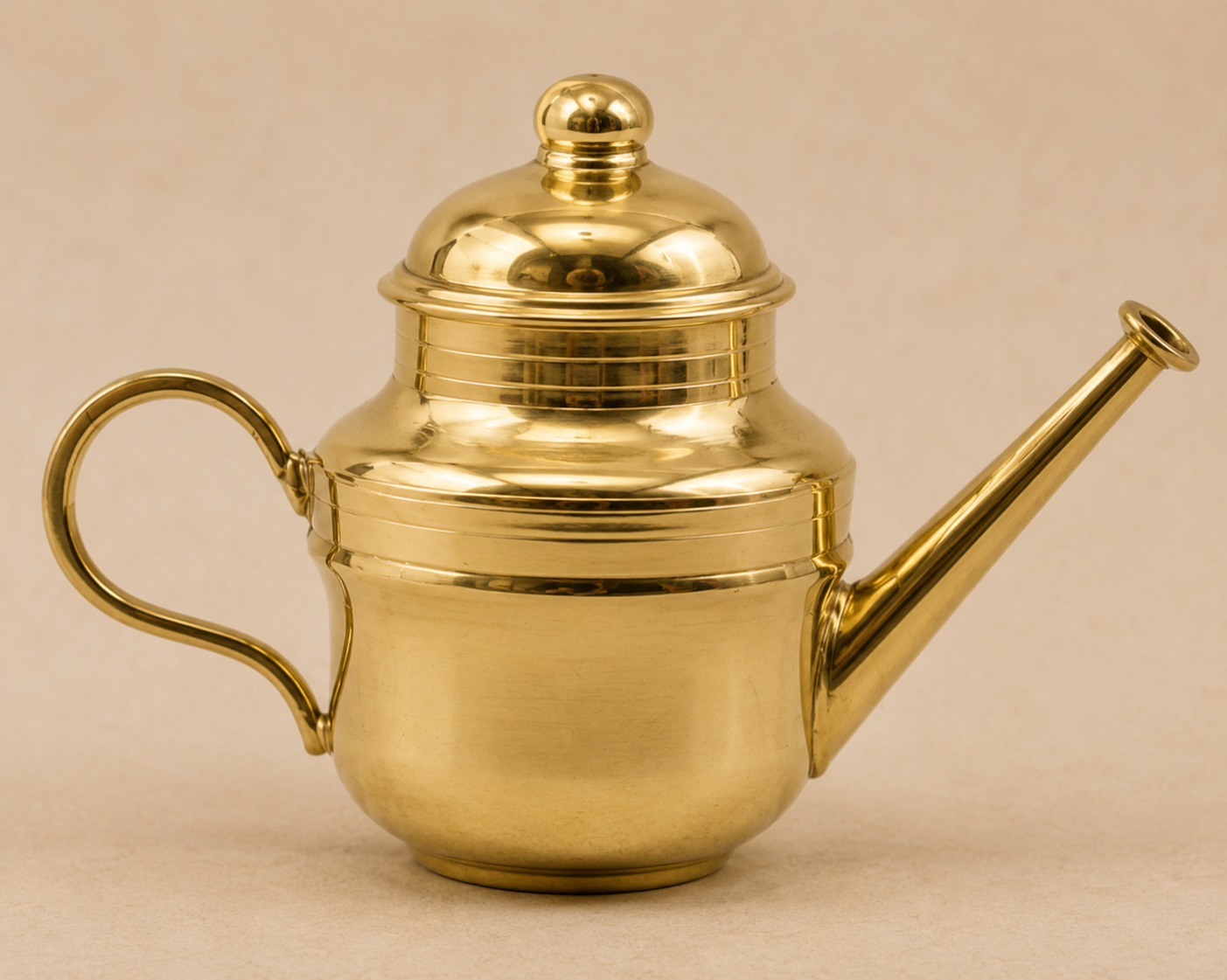
Bindige is a traditional water vessel used to carry water and, in some settings, to draw water from a well. It was traditionally made from metals such as brass, copper and iron.
Bindige was an important household water vessel in traditional Kodava homes. It was used for carrying and storing water and could also be used to draw water from a well. Its rounded body provided a practical form for holding a substantial quantity of water while allowing the vessel to be carried by hand.
Traditional Bindiges were made from durable metals, particularly brass, copper and iron. The metal construction made them reusable and long-lasting. Brass and copper vessels also formed part of the wider tradition of maintaining carefully made metal household utensils.
It is important to distinguish the Bindige from the traditional earthen water vessel. An earthen vessel was called Kudke and was not referred to as Bindige. This distinction should be retained in the museum documentation as part of traditional Kodava terminology
How It Was Used
Traditional use: Carrying water from wells and other water sources
Drawing water from a well
Transporting water to the household
Storing water for domestic use
Everyday household water-related activities
Cultural significance: Bindige represents an important part of the everyday material culture of traditional Kodava households. Water collection and storage were essential domestic activities, and the vessel reflects the practical design of household objects made for repeated use.
Historical context: Before modern plumbing and household water-storage systems became common, water had to be collected from wells, streams and other local sources. Vessels such as the Bindige therefore played an important role in everyday domestic life.
Material & Making
BrassIron
Metal Bindiges were traditionally shaped from sheets or worked metal through processes such as heating, forming, joining and finishing. The exact technique varied according to the metal and artisan. Traditional metalworking skills were required to produce a strong, watertight vessel.
Bindiges could vary in size depending on household requirements and purpose. Variations also occurred according to the material used—brass, copper or iron. Specific traditional measurements and named variants require further documentation
Who Used It? / Where? / When?
OwnershipNot yet recorded
Period
Pre-colonial
Status of traditionDeclining
The Tradition Today
Reason for decline: The everyday use of Bindige declined with the introduction of piped water, taps, plastic buckets, modern containers and other household water-storage systems. Changing lifestyles also reduced dependence on traditional water-collection practices.
Revival efforts: Bindige can be preserved as a traditional household object and displayed in ancestral homes, museums and heritage exhibitions. Traditional brass and copper vessels may also continue to be used during ceremonial or culturally significant occasions