About the Object
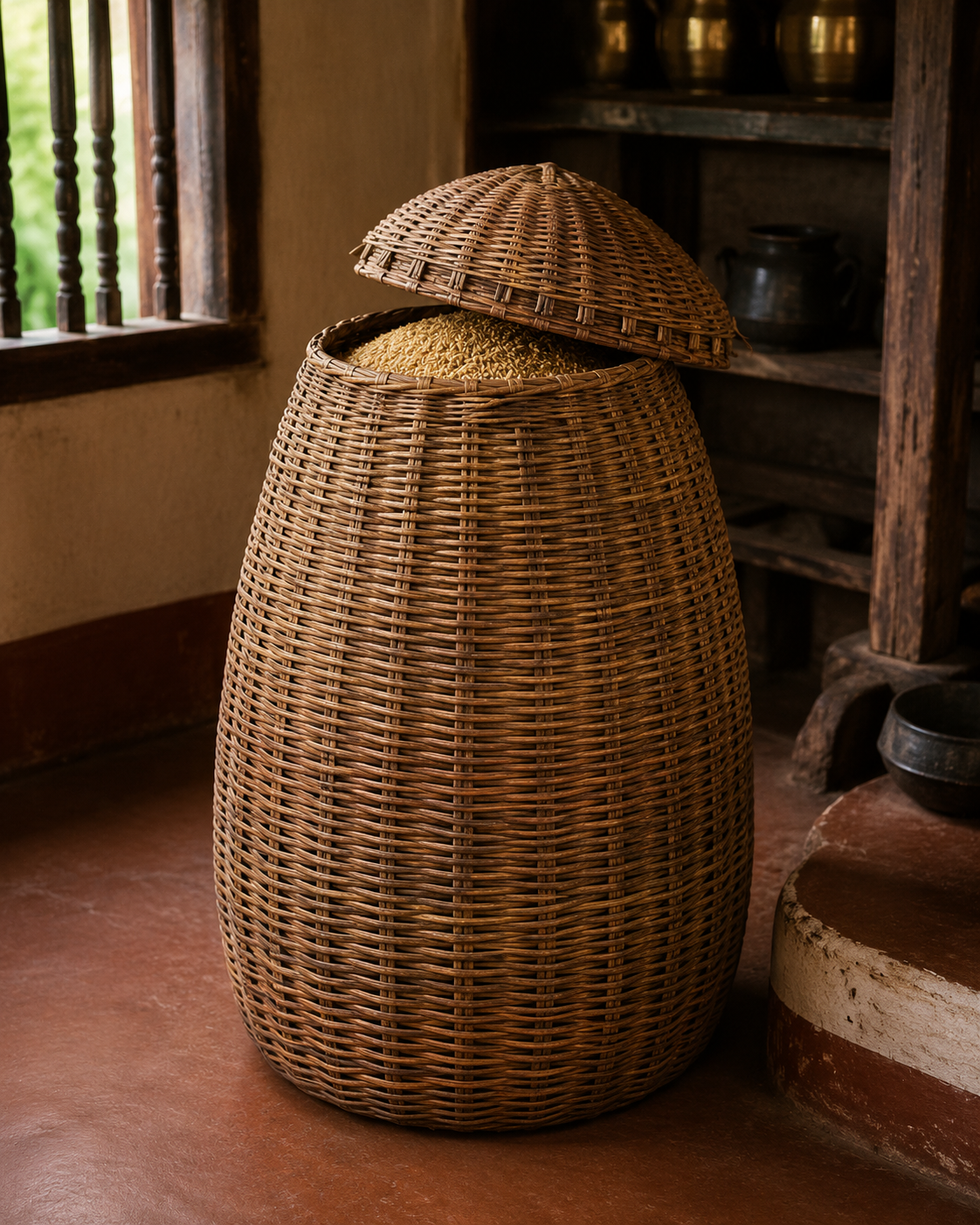
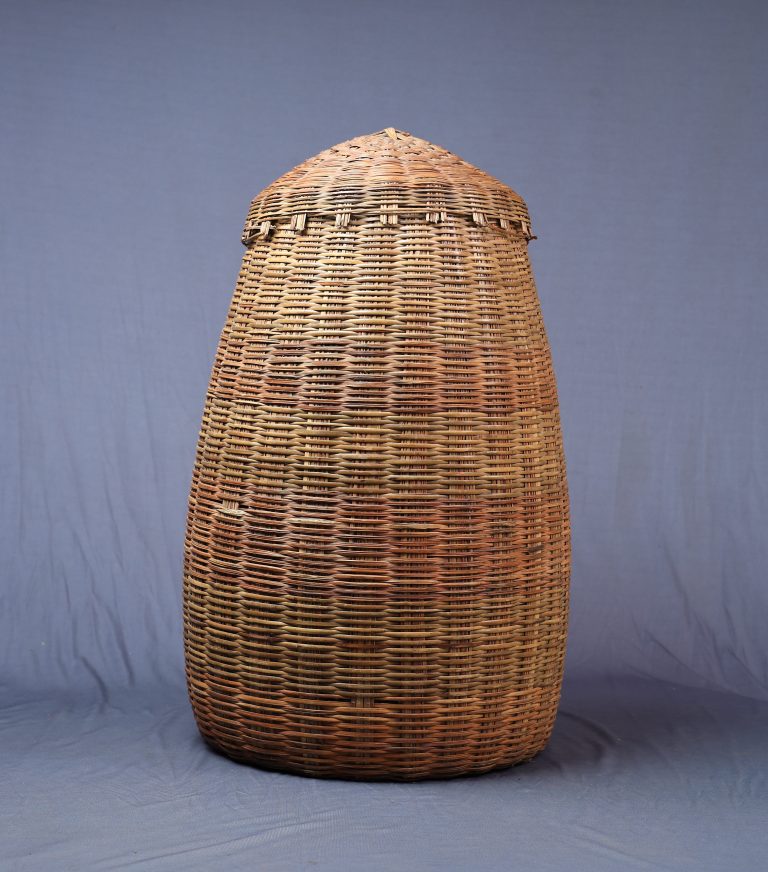
Akki Komme is a large basket-like storage container traditionally used to store rice and paddy. It was made using locally available natural materials such as bamboo, cane and reed
Akki Komme was an important traditional storage unit used in Kodava households for keeping harvested paddy and rice. It was produced in different sizes according to storage requirements and could be made from bamboo, cane or reed
How It Was Used
Traditional use: Its principal purpose was the storage of rice and paddy, particularly in traditional households where agricultural produce had to be stored safely after harvest. The Akki Komme served as a practical household storage unit, allowing agricultural produce to be retained within the home rather than relying on modern storage containers
Cultural significance: Akki Komme represents the traditional rice-storage practices of Kodagu and demonstrates the use of locally available bamboo, cane and reed to create durable household storage. Its presence in old houses and Ainmanes provides an important link to the agricultural and domestic life of earlier generations.
Historical context: The source places the tentative period of usage before and during the reign of the Kodagu Rajas and the British rulers
Material & Making
BambooCane
The container was traditionally made by weaving and shaping natural plant materials such as bamboo, cane or reed into a large basket-like structure
Who Used It? / Where? / When?
OwnershipNot yet recorded
Period
Pre-colonial
Status of traditionDeclining
The Tradition Today
Reason for decline: Akki Komme has largely declined because traditional storage baskets have been replaced by contemporary materials, particularly plastic, in modern houses.
Revival efforts: Some variants continue to survive in old houses, and preserved examples with collectors provide opportunities to document the object and its traditional use before the knowledge disappears. Preservation should document the different sizes, materials, weaving patterns, construction methods and traditional locations of Akki Komme. Existing examples in old houses, Ainmanes and private collections are there