

Kaachankal Mooppe
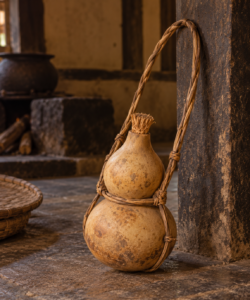 Kaachankal Mooppe
Short Description
A traditional container used to store liquor, made either from mud/clay or from a dried bottle gourd. The vessel shown in the reference has a narrow opening plugged with straw as a simple stopper
Full Description / Long Description
Kaachankal Mooppe was a traditional storage vessel used for keeping liquor. It could be made from locally available mud/clay or from a dried bottle gourd, reflecting the use of natural materials for household storage. The bottle-gourd form had a naturally narrow neck and opening, which could be closed with a bundle or plug of straw. Its rounded body provided storage capacity while the narrow mouth helped contain the liquid.
Traditional Use
Used primarily for storing liquor and fermented alcoholic preparations.
Design & Form
Generally rounded or bulb-shaped, with a comparatively narrow neck and small opening. The bottle-gourd version retained the natural shape of the gourd.
Materials
- Mud/clay
- Dried bottle gourd
- Straw used as a stopper or plug
Method of Making / Construction
The mud version would be shaped and fired as an earthen vessel. The bottle-gourd version was made by allowing the gourd to mature and dry, removing its contents, cleaning and drying the interior, and retaining the natural hollow shell. A straw plug could be inserted into the opening.
Variants / Size
Two principal forms are documented:
- Mud/clay vessel
- Dried bottle-gourd vessel
Size and shape would depend on the material and intended storage capacity.
Cultural / Functional Significance
Kaachankal Mooppe represents an earlier system of storing liquor using locally available natural materials rather than manufactured bottles or containers.
Reason for Decline
The use of glass bottles, metal containers and modern plastic containers made such traditional storage vessels largely unnecessary. The decline of traditional household liquor-making and changing domestic practices would also have contributed.
Revival & Continued Use
Today, the object can be preserved as a heritage artifact and documented through the Virtual Modha Goodē. Demonstrating the preparation of bottle-gourd containers and recording traditional liquor-making practices can help retain knowledge of the object.
Preservation
The vessels should be kept dry and protected from impact, especially the fragile dried-gourd form. Photographs, measurements, material details, traditional preparation methods and oral histories from older generations should be recorded.
Historical & Cultural Importance
Kaachankal Mooppe is an example of Kodagu’s traditional resourcefulness—turning locally available clay or a naturally hollowed gourd into a functional storage vessel. It also documents an older system of liquor storage and the relationship between traditional food-and-drink practices and locally available materials.
Comments
Leave a comment!Login for Post Comment
Last posts