

Chombh
Contents
CHOMBH
1. Object Name 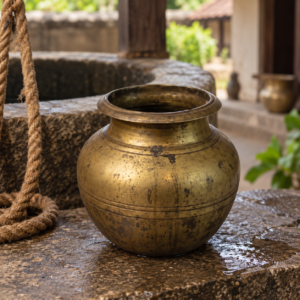
Chombh
2. Kodava Name
Chombh
3. English Name
Small Metal Water Pot
4. Alternate Names
Chombh, Water Pot, Water-Drawing Pot, Small Metal Vessel
5. Short Description
Chombh is a small metal pot traditionally used for drawing and carrying water. Its compact, rounded form made it convenient to handle when collecting water from a larger water vessel or source.
6. Full Description
The Chombh is a small, rounded metal vessel associated with traditional household water use. The example shown has a broad, rounded body, a relatively narrow neck and a pronounced open rim.
Its compact size made it practical for drawing water and carrying smaller quantities for household use. The sturdy metal construction allowed the vessel to withstand repeated handling and everyday use.
Like many traditional household vessels, the Chombh served a simple but essential purpose. It reflects the importance of manually drawing, carrying and transferring water in traditional Kodava homes, before modern piped-water systems and contemporary water containers became commonplace.
7. Traditional Use
The Chombh was traditionally used for drawing water, transferring water from a larger source or vessel, and carrying small quantities of water for household use.
8. Design & Form
Chombh has a compact, rounded body with a narrower neck and an open, flared rim. The rounded lower body provides good capacity while the neck and rim make the vessel easier to hold and use when drawing or transferring water.
9. Materials
Metal, traditionally produced in durable forms suitable for repeated household use.
10. Method of Making
A metal Chombh would be shaped by traditional metalworking and vessel-forming techniques, with the metal hammered and formed into its rounded body, neck and rim.
The vessel would then be finished and smoothed to produce a functional water container.
11. Variants / Types
Variations may occur in:
- Size
- Body proportions
- Rim shape
- Metal used
- Degree of decorative work
12. Cultural / Functional Significance
The Chombh represents the everyday water-management practices of the traditional Kodava household. Its small size and practical form reflect a time when water was manually collected, transferred and carried as part of daily domestic routines.
13. Historical Context
Chombh belongs to the traditional household material culture of a period when water was generally drawn and carried manually rather than supplied directly through modern plumbing.
Small vessels such as the Chombh played an important role in transferring water from wells, tanks, larger storage vessels or other household water sources.
14. Traditional Location / Setting
The Chombh would have been used around the traditional household, kitchen, bathing area and water-collection points, wherever small quantities of water needed to be drawn or transferred.
15. Craftsmanship / Special Features
Its characteristic feature is its rounded, compact body combined with a smaller neck and flared rim. The construction reflects the ability of traditional metalworkers to create strong, functional vessels from sheet or worked metal.
16. Reason for Decline
The everyday use of Chombh declined with the introduction of:
- Piped water supply
- Modern taps and plumbing
- Plastic and stainless-steel containers
- Modern buckets and water vessels
- Changes in household water-storage practices
17. Revival & Continued Use
Chombh can be preserved through heritage museums, traditional-house displays and demonstrations of earlier household water practices.
Surviving examples are particularly valuable because they help document the range of vessels once used for everyday water collection and handling.
18. Preservation
Preservation should include:
- Documenting surviving Chombh vessels
- Recording dimensions and weight
- Identifying the type of metal
- Photographing the vessel from different angles
- Documenting its traditional method of use
- Recording oral histories associated with water collection and household practices
Comments
Leave a comment!Login for Post Comment
Last posts