

Attani
Contents
Attani
English Name 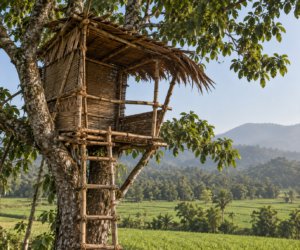
Tree-top Watch Shelter
Short Description
A traditional tree-top shelter used by farmers to keep watch over growing crops.
Full Description
The Attani is a simple shelter built on top of a tree, usually overlooking agricultural fields. It provided a raised vantage point from which farmers could watch over their growing crops and protect them from birds, wild animals and other threats.
The structure reflects the practical ingenuity of traditional Kodagu farming communities and their close relationship with the agricultural landscape.
Traditional Use
- Built above a tree overlooking the fields
- Used for keeping watch over growing crops
- Provided a resting place for the person guarding the fields
- Helped farmers observe and respond to threats to the crop
Design & Form
The Attani was generally a simple elevated platform or small shelter supported by the branches or trunk of a tree. Its design was functional, lightweight and suited to the surrounding agricultural environment.
Materials
Traditionally constructed using locally available materials such as wood, bamboo, branches, grass and other natural materials.
Method of Making
The platform and shelter were assembled directly on a suitable tree, using branches, wooden poles and natural materials. The structure was secured to provide a stable elevated position.
Variants / Types
The size and construction of an Attani varied according to the crop, location, available trees and the requirements of the farmer.
Cultural / Functional Significance
The Attani represents traditional methods of crop protection and field management practiced by farming communities in Kodagu.
Historical Context
Before modern agricultural surveillance and crop-protection methods, farmers depended on direct observation of their fields. The Attani provided an elevated position from which large areas of cultivated land could be monitored.
Traditional Location / Setting
Found in and around agricultural fields, particularly where crops required protection from birds and wild animals.
Craftsmanship / Special Features
Its most distinctive feature was its elevated position on a tree. The structure made use of the natural strength and height of the tree while requiring relatively little material.
Reason for Decline
The use of traditional tree-top watch shelters declined with changes in agricultural practices, improved fencing, modern crop-protection methods and changing patterns of farming.
Revival & Continued Use
The Attani can be documented and recreated as part of Kodagu’s agricultural heritage, demonstrating the traditional knowledge and practical solutions developed by farmers.
Virtual Modha goode
- To see many articles like these click on Virtiual Modhagood – The virtual Museum
Comments
Leave a comment!Login for Post Comment
Last posts