

Mund Mane
Contents
Mund Mane
The name refers to a house organised around a central open courtyard, or mund, which forms an important architectural and social space within the ancestral home.Mund Manes are traditionally associated with different okkas
Architecture
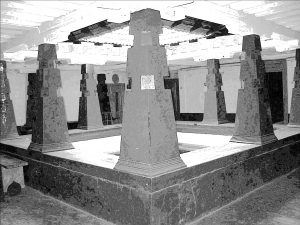
The defining feature of a Mund Mane is its central open courtyard. Rooms and covered spaces are arranged around the mund, allowing light and air to enter the interior of the house.
The entrance generally leads into a verandah and then into the central area of the house. Traditional houses may contain stone pillars, wooden beams, carved doorframes, raised platforms and long wooden seats known as aimara.
The principal sacred and social space is the Nellakki Nadubaade, generally located within the main part of the house. It is used for family ceremonies, ancestral worship and important community occasions.
Traditional Mund Manes will contain:
- Mund – the central open courtyard
- Nellakki Nadubaade – the principal sacred and gathering space
- Kanni Kombare – a sacred room associated with family rituals
- Aimara – traditional wooden seating platforms
- Kall Boti – sacred stone associated with the ancestral house
- Bhasma Kutt – a receptacle associated with sacred ash
Religious and Ritual Significance
The Mund Mane has an important role in Kodava ancestral traditions.The house may contain sacred objects and spaces associated with the karanava, the ancestral figure of the okka. Rituals honouring the ancestors are performed at the ancestral home, particularly during ceremonies connected with family and agricultural traditions.
Relationship with ainmanes
The terms Mund Mane and ainmanes are related but do not mean exactly the same thing. ainmanes broadly refers to the ancestral house of an okka. Mund Mane describes a particular architectural form of ainmane characterised by a central open courtyard.Thus, a Mund Mane can be an ainmane, while not every ainmane is necessarily a Mund Mane.
Construction and Materials
Traditional Mund Manes were constructed using locally available materials and traditional building techniques.
Common materials included:
- Stone
- Timber
- Clay and mud
- Country tiles
- Laterite
- Lime and other traditional finishes
Heavy wooden beams supported the roof structure, while stone was commonly used for foundations, pillars, steps and courtyards.Traditional floors were often made of packed earth or mud treated with cow dung. Over time, many houses have been modified with cement, concrete, ceramic tiles and other modern materials.Roofs were traditionally constructed with timber and covered with country tiles. Many existing houses have had their roofs replaced or retiled over the years.
Wood Carving
Wood carving is an important feature of many ainmanes
Doorframes, windows, pillars and roof elements may contain geometric designs, floral patterns and other decorative motifs.
The extent of ornamentation varies considerably between houses. Some ancestral homes contain elaborate carved wooden panels, while others have relatively simple architectural detailing.
The surviving examples provide valuable evidence of the craftsmanship and building traditions of earlier generations.
Historical Importance
Mund Manes are important sources for understanding the history of Kodagu because they preserve information about:
- Family and okka histories
- Traditional architecture
- Ancestral worship
- Agricultural society
- Social organisation
- Local craftsmanship
- Material culture
- Community traditions
- Historical events and oral traditions
Some ancestral houses also preserve old photographs, weapons, agricultural implements, documents, family trees, ritual objects and other artefacts.
Comments
Leave a comment!Login for Post Comment
Last posts