

kaikane neele
Contents
Kaikane Neele 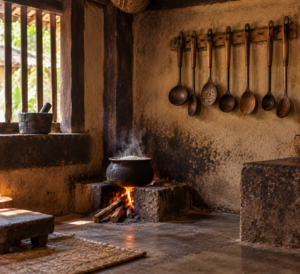
English Name
Traditional Ladle Rack / Kitchen Utensil Rack
Alternate Names
Wooden ladle rack, kitchen utensil rack, wooden hanging rack.
Short Description
Kaikane Neele is a traditional wooden rack used to hang and organise ladles and other kitchen utensils in a traditional Kodava kitchen.
Full Description / Long Description
Kaikane Neele was a practical fixture of the traditional kitchen, providing a dedicated place to keep ladles and other frequently used cooking implements. Made primarily from wood, the rack was fixed to a wall or wooden surface, with individual pegs or hooks from which utensils could be hung.
The arrangement kept cooking tools accessible while helping maintain order in the kitchen. The rack shown in the reference has a simple horizontal wooden board with several projecting wooden pegs, each supporting a different type of ladle or utensil.
Unlike modern kitchen storage systems, such traditional racks were integrated into the architecture and furniture of the kitchen and were made using locally available materials.
Traditional Use
- Hanging cooking ladles
- Keeping kitchen utensils organised
- Making frequently used implements easily accessible
- Storing utensils above or beside the cooking area
Design & Form
A simple horizontal wooden plank or bar with multiple evenly spaced pegs or projections. Ladles were suspended vertically from these pegs. The design was functional rather than decorative.
Materials
Primarily wood, with wooden pegs or hooks.
The exact traditional wood species would vary and requires further documentation.
Method of Making / Construction
A suitable piece of wood was shaped into a horizontal rack and fitted with multiple pegs. The rack could then be fixed securely to a wall, wooden beam or other structural surface in the kitchen.
Variants / Size
The size depended on the kitchen and the number of utensils to be stored. Some racks could have only a few pegs, while larger examples could accommodate numerous ladles and implements.
Cultural / Functional Significance
Kaikane Neele represents the practical organisation of the traditional Kodava kitchen. It shows how everyday household objects were stored using simple wooden fixtures rather than modern cupboards, shelves and manufactured kitchen organisers.
Historical Context
Traditional kitchens relied heavily on wood-fired cooking and a range of handmade or locally produced utensils. Keeping these implements close to the cooking area was essential for everyday food preparation. A dedicated utensil rack such as Kaikane Neele formed part of this functional kitchen environment.
Traditional Location / Setting
Traditional Kodava kitchens, particularly on a wall or wooden structure close to the cooking and food-preparation area.
Craftsmanship / Special Features
- Simple wooden construction
- Multiple individual hanging points
- Designed specifically for frequent kitchen use
- Easy access to cooking implements
- Functional use of available timber
- Integrated naturally into the traditional kitchen environment
Reason for Decline
The use of traditional wooden utensil racks declined with changes in kitchen design and the introduction of modern shelves, cabinets, hooks, stainless-steel racks and modular kitchen storage.
Revival & Continued Use
Kaikane Neele can be revived as part of heritage kitchens, restored ainmanes and traditional homes. Similar wooden racks can also be recreated by local craftsmen for heritage interiors and cultural demonstrations.
Comments
Leave a comment!Login for Post Comment
Last posts