

Ambali Kaikane
Contents
Ambali Kaikane (ಅಂಬಳಿ ಕೈಕಣೆ )
Overview
Ambali kaikane is a traditional ladle associated with the preparation and serving of ambali, a simple and nourishing porridge traditionally prepared in Kodava households.
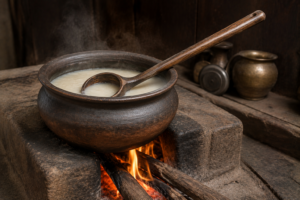
The utensil represents the practical kitchenware used by earlier generations and reflects a food culture built around locally available ingredients, simple preparation and everyday nourishment.
Traditional Use
The Ambali kaikane was used to stir, mix and serve ambali during its preparation. Its shape and size made it suitable for handling a liquid or semi-liquid food while it was being cooked.
Ambali in Traditional Food Culture
Ambali is a traditional porridge prepared from grains or other locally available ingredients. It is valued for being simple, filling and easy to digest.
In traditional rural households, foods such as ambali were an important part of everyday meals because they could be prepared using ingredients readily available within the local agricultural environment.
The preparation of ambali therefore reflects the connection between Kodagu’s agricultural traditions and its household cuisine.
Design and Craftsmanship
The Ambali kaikane was designed as a practical kitchen utensil. Traditional examples could be made from materials such as wood or metal, depending on the period and household.Its long handle allowed the user to stir or serve the preparation without placing the hand close to the cooking vessel. The simple construction reflects the functional character of traditional Kodava kitchen implements.
Everyday Kitchen Heritage
Unlike elaborate ceremonial objects, the Ambali kaikane belonged to the everyday world of the traditional kitchen.
It represents the many small utensils that supported daily household life—preparing food, serving meals and feeding family members. Such objects rarely attracted attention in their own time, yet they provide valuable evidence of how earlier generations cooked and ate.
Heritage Significance
The Ambali kaikane is a small but meaningful example of Kodava culinary material culture.
It connects a simple kitchen utensil with a traditional food practice and reminds us that heritage is not limited to grand buildings, weapons or ceremonial objects. The ordinary tools used every day also tell the story of a community.
Today, preserving an Ambali kaikane helps document the food traditions, craftsmanship and everyday domestic life of earlier generations in Kodagu.
Museum Note
The Ambali kaikane is preserved as an example of traditional Kodava kitchenware, illustrating the utensils and food practices associated with everyday household life in Kodagu.
Virtual Modha goode
- Virtiual Modhagood – The virtual Museum of Kodava Heritage.
Comments
Leave a comment!Login for Post Comment
Last posts