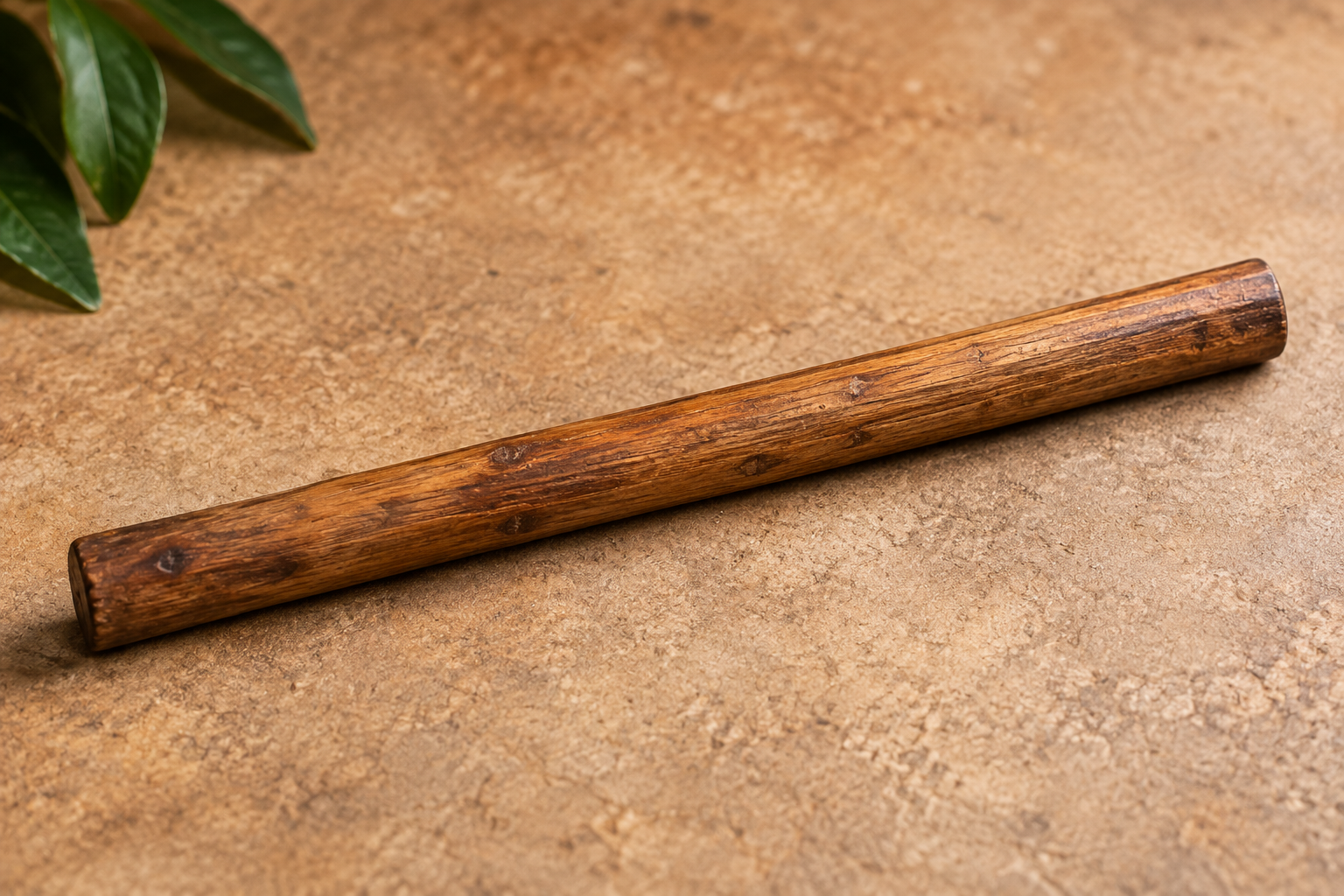
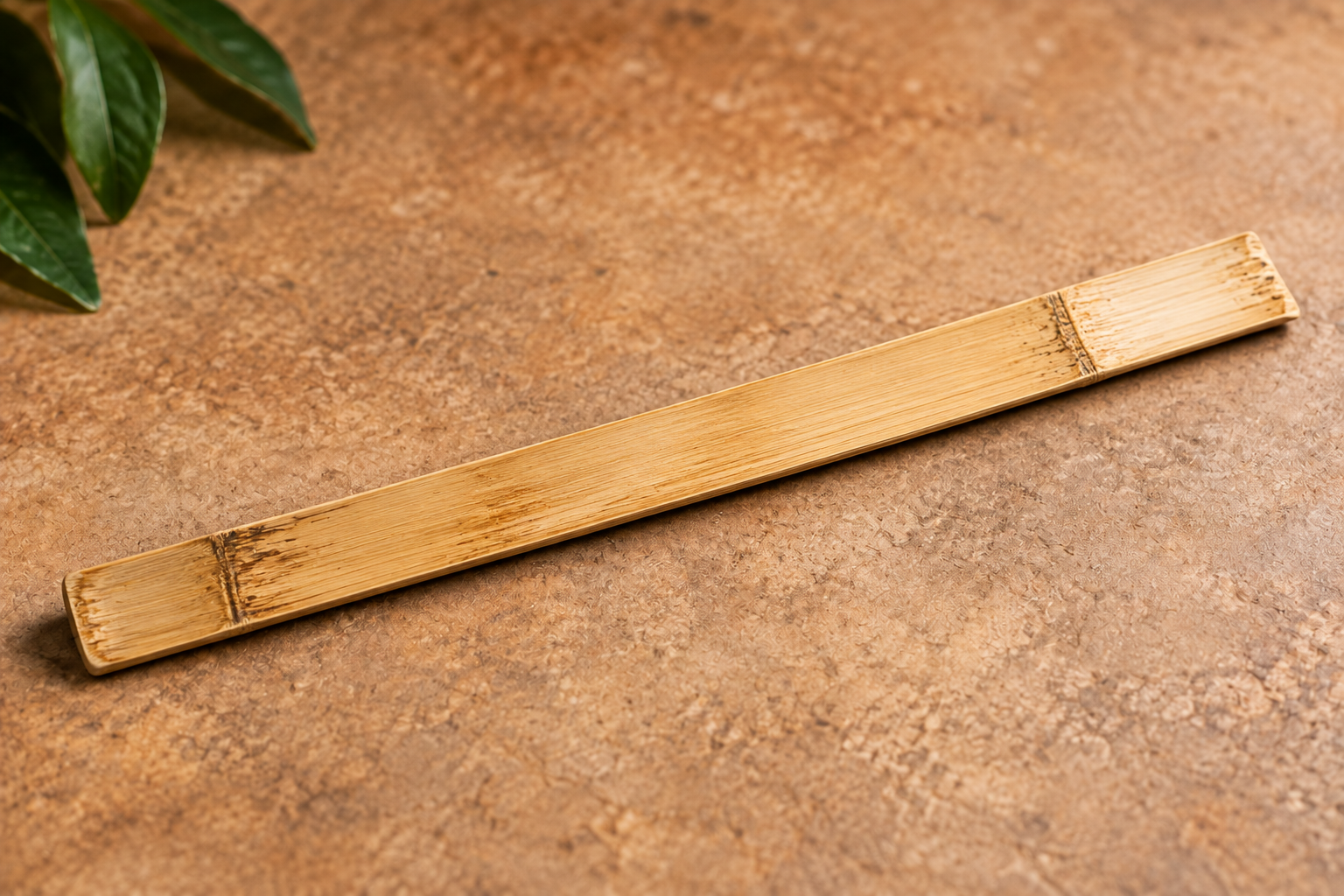
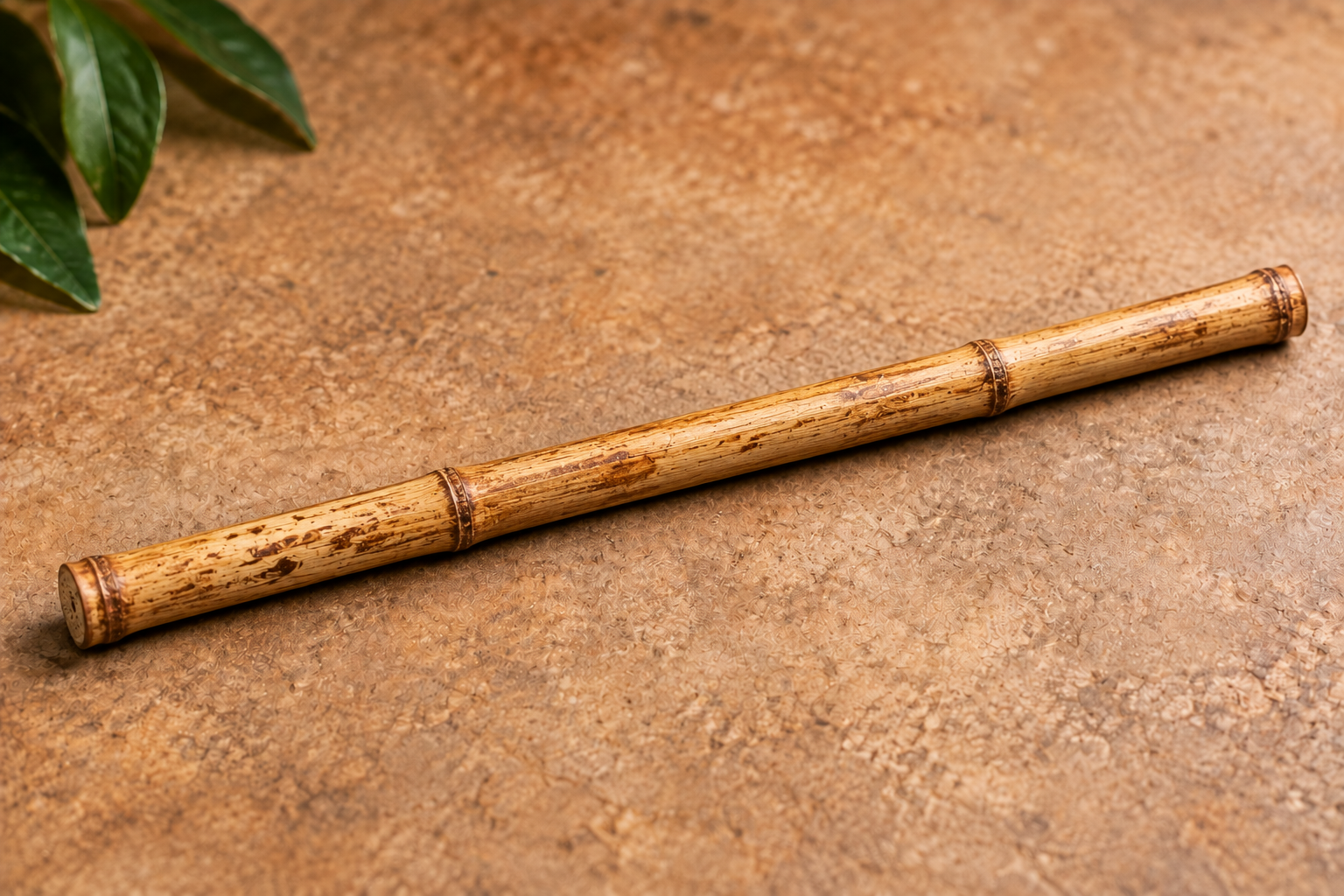
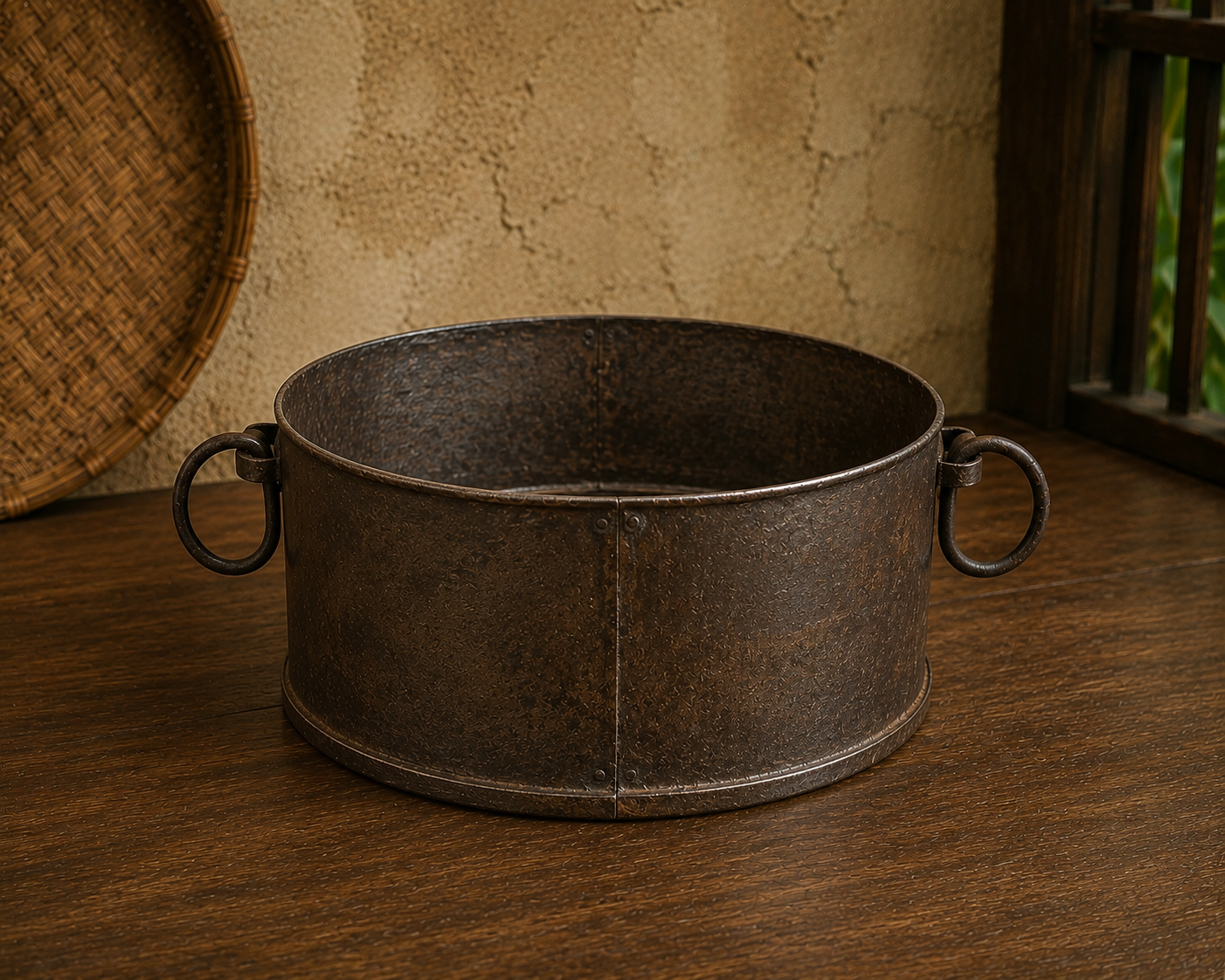
Adi Kool is a small, simple measuring implement representing the traditional measurement of one Adi, or approximately one foot. Made as a fixed-length stick, it provided a convenient physical reference for measuring or estimating the dimensions of objects and materials in everyday life.
Unlike modern measuring tapes and rulers, the Adi Kool was a straightforward locally made tool. Its usefulness came from its fixed length, allowing the same reference to be repeatedly used when measuring objects or communicating dimensions.
Traditional use: Adi Kool was used to measure or estimate the length of objects, materials and spaces, particularly in traditional household, agricultural, craft and construction activities.
Cultural significance: Adi Kool represents the practical ingenuity of traditional measurement systems, where a simple locally made object could serve as a reliable everyday measuring reference. Adi Kool could be used in homes, ainmanes, agricultural settings, workshops and construction-related activities.
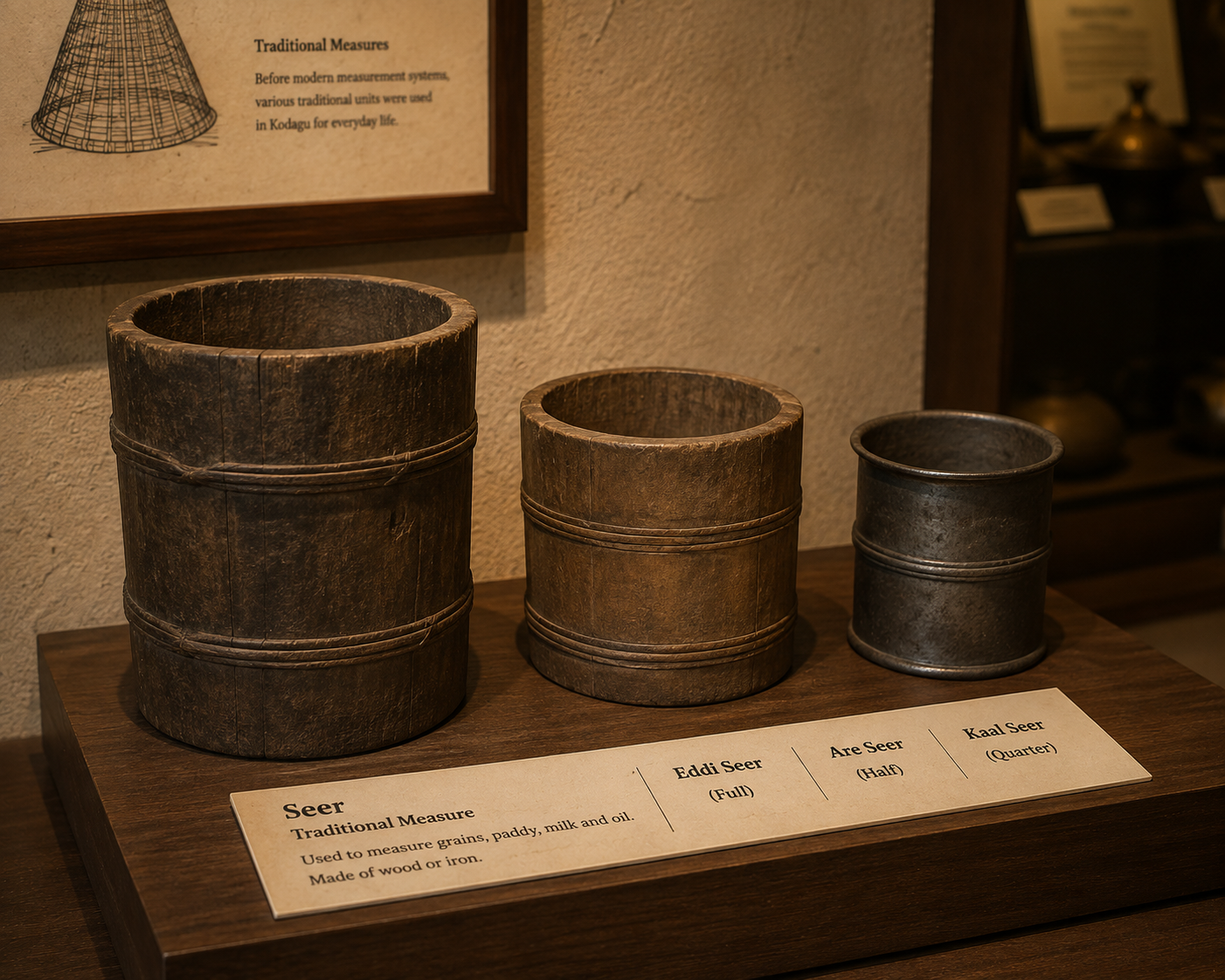
Historical context: Before modern rulers and measuring tapes became commonplace, fixed-length sticks and similar references provided practical ways of measuring materials and communicating dimensions.
A suitable straight piece of wood was selected and cut to the required length of one Adi. It could then be smoothed and finished so that it was convenient to handle and use repeatedly.
Reason for decline: ts use declined with the introduction and widespread availability of standardized rulers, measuring tapes and metric measurement systems.
Revival efforts: Adi Kool can be preserved as part of the documentation of traditional Kodava measurement practices and may be demonstrated in heritage museums and educational programmes.
A surviving Adi Kool should be preserved with its original dimensions, material, construction and traditional method of use documented. Oral accounts explaining how it was used can also be recorded.
You are preserving Adi Kool — One-Foot Measuring Stick.