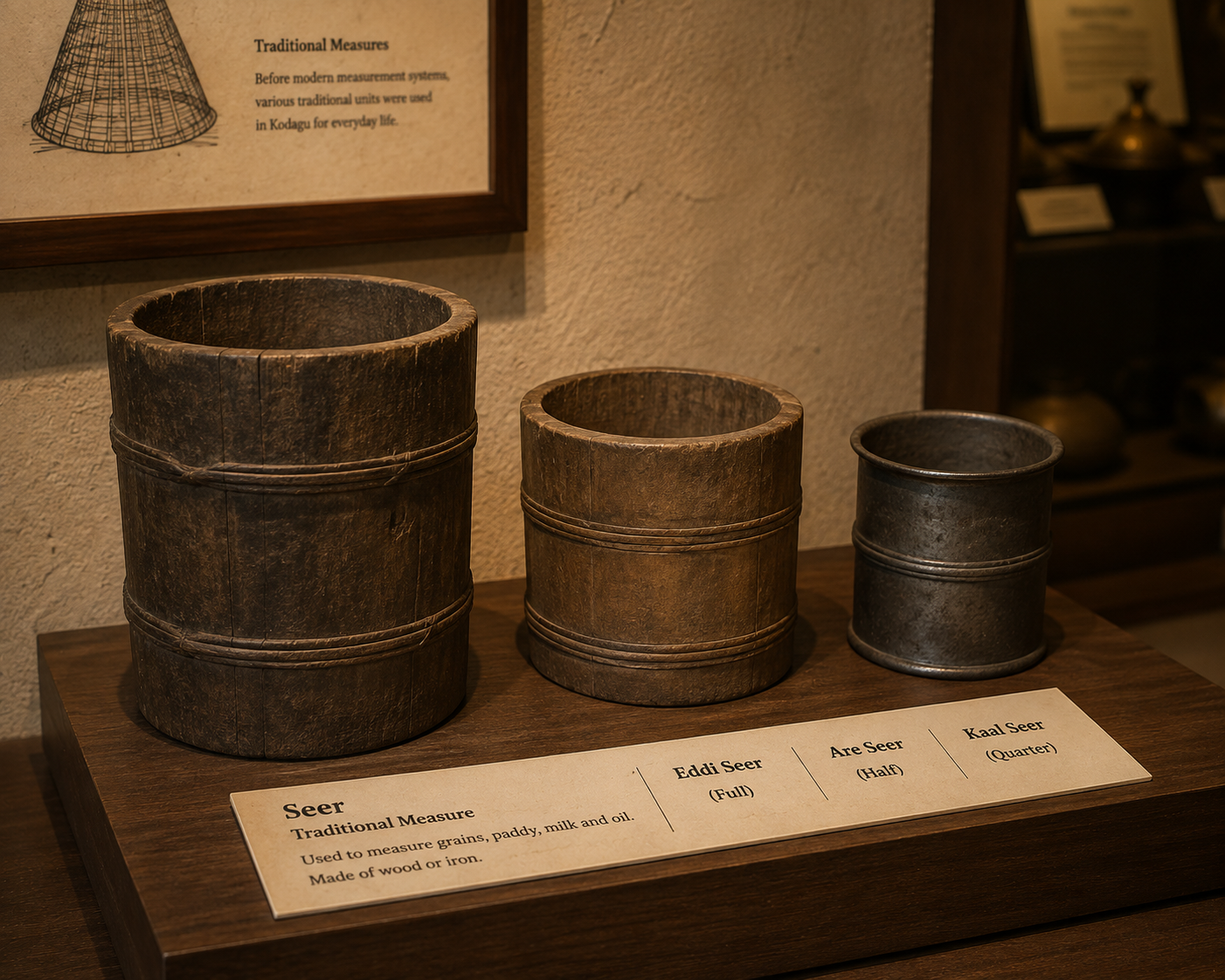
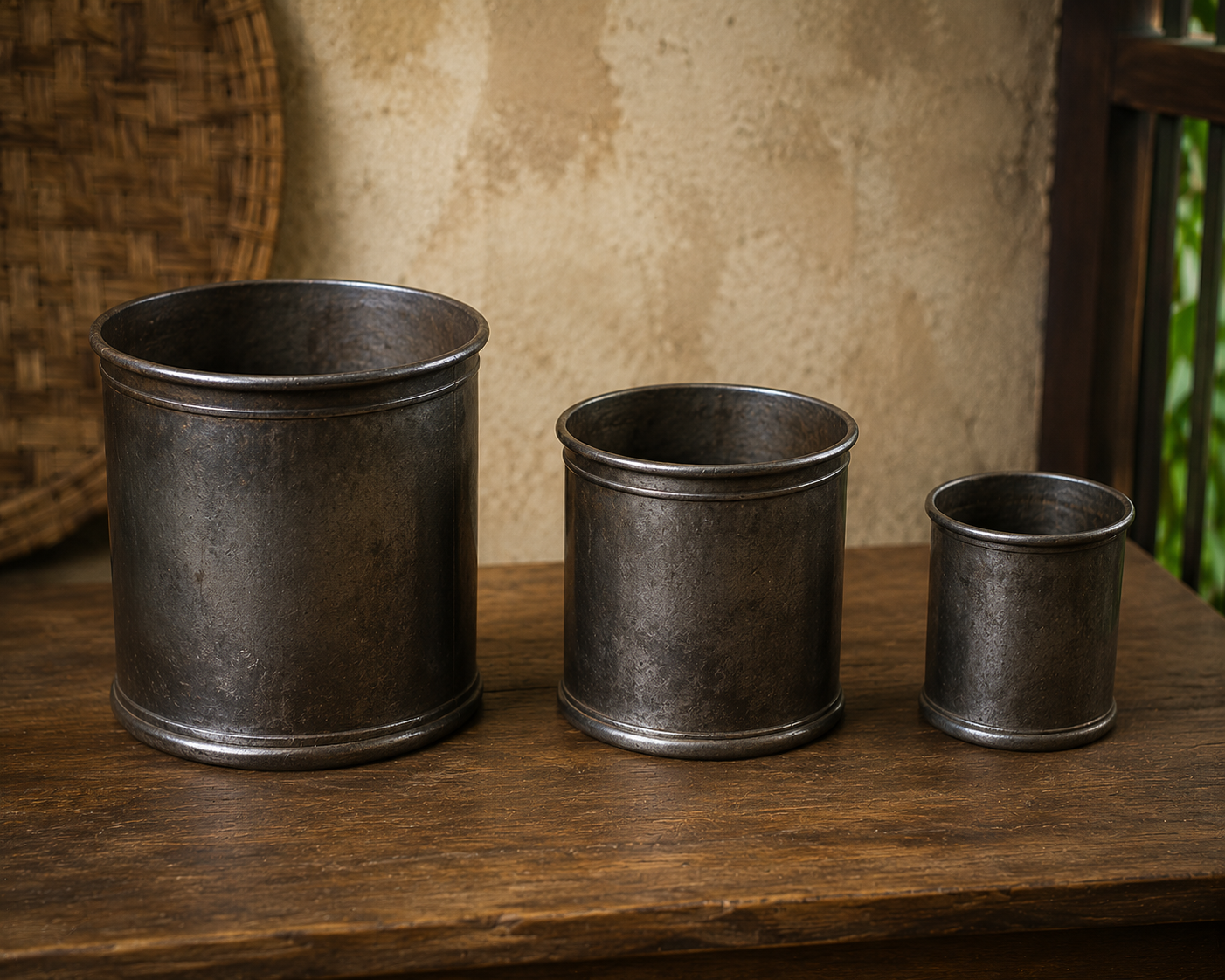
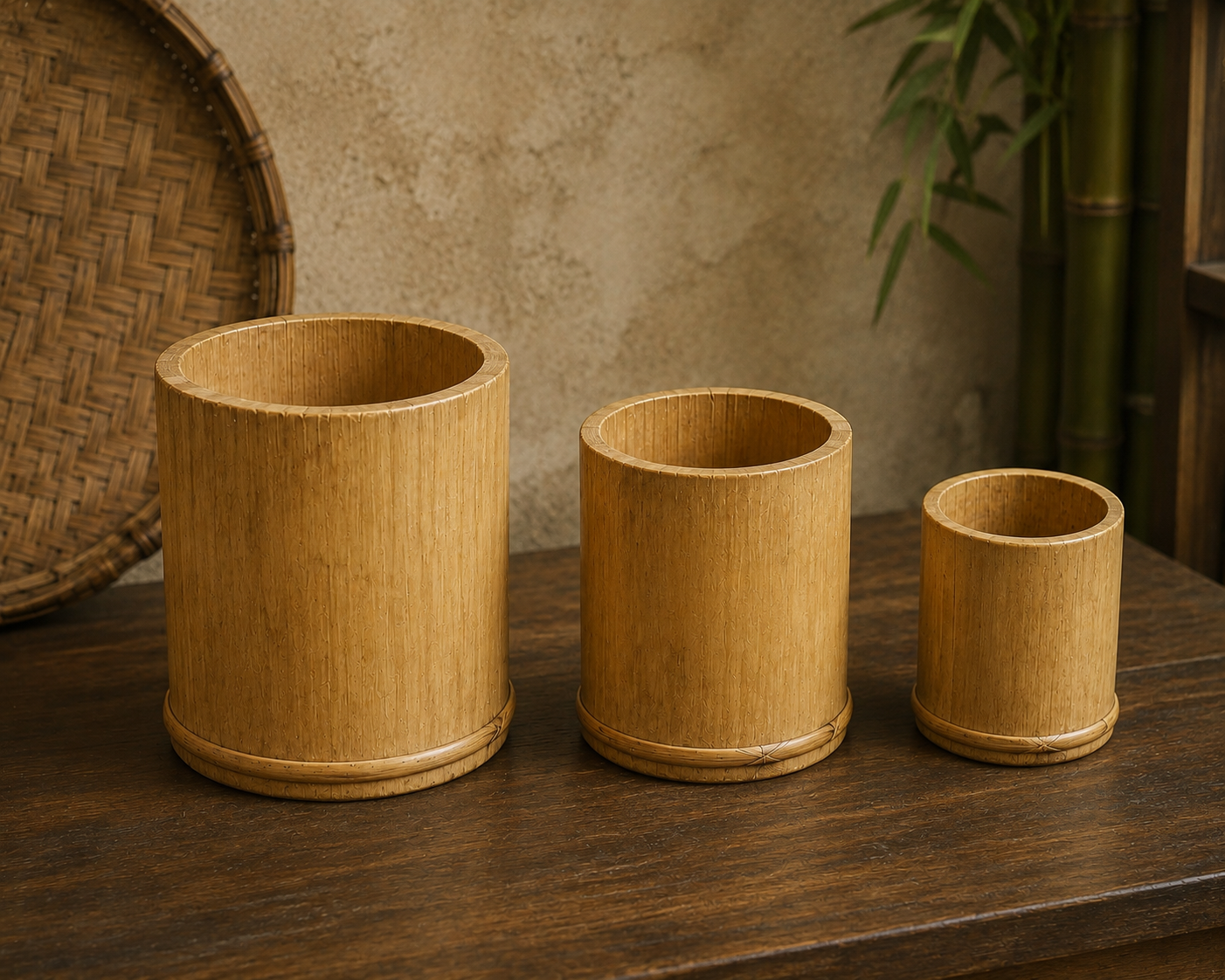
Seer was a traditional unit of measure used by Kodavas for measuring grains, milk and oil. It was represented by physical measuring containers made traditionally from wood or iron. The Seer was an important traditional measuring unit associated with the agricultural and household economy of Kodagu. It was used to measure commodities including paddy and other grains, milk and oil. The measure existed in different fractional sizes, allowing households to measure quantities according to their requirements.
The full measure was known as Eddi Seer, while smaller measures included Are Seer, representing half a Seer, and Kaal Seer, representing one-quarter of a Seer. The physical measuring vessels were traditionally made from wood or iron
Traditional use: The Seer was traditionally used to measure:
Grains
Paddy and rice
Milk
Oil
Cultural significance: The Seer was closely connected to everyday economic and agricultural life. It provided a recognised way of measuring essential commodities and was particularly relevant in a society where paddy formed an important part of household production and exchange.
Historical context: The Kodagu Heritage record states that the Seer was in use since the time Kodavas began growing paddy. It remained in use until the late 1990s, when the SI system of measurement replaced it for regular use.Historical sources also show that traditional grain measures were important in Coorg's agricultural economy, including the use of grain as a form of payment to agricultural workers The Seer represents an important part of Kodagu's traditional agricultural and economic history. It connects the cultivation of paddy with systems of measurement, household exchange, worker compensation and temple offerings.Its three traditional forms—Eddi Seer, Are Seer and Kaal Seer—also demonstrate how earlier Kodava society used locally understood units to measure everyday commodities. Although largely replaced by the SI system, surviving examples remain valuable material evidence of the older agricultural economy of Kodagu.
Wooden Seers were traditionally fashioned as measuring containers, while iron examples were made as durable metal measures. Its three traditional forms—Eddi Seer ( Full Unit ), Are Seer( Half Unit ) and Kaal Seer( Quarter Unit )
Reason for decline: The primary reason for its decline was the introduction and widespread adoption of the SI system of measurement, which replaced traditional local measures for regular use
Revival efforts: The Seer is no longer in regular everyday use, but the Kodagu Heritage page records that some examples continue to be used.
In a few houses, paddy or rice may still be measured using the traditional Seer when it is given to workers as compensation. It is also reportedly used in some temples when growers contribute grain to the deity
You are preserving Seer ಸೇರ್ — Traditional Measure.