

Povvali mara – Ceylon teak
Contents
Povvali Mara (Cassine glauca)
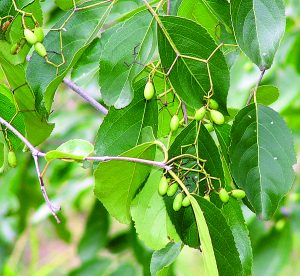
Povvali Mara (Cassine glauca) is one of the Native Trees of Kodag. It is an evergreen tree valued for its dense, dark-green foliage and is traditionally found in the forests and landscapes of the region. It is also cultivated as an ornamental tree and planted along roadsides and avenues.
One of its distinctive characteristics is its ability to retain its deep green foliage during the dry summer months. When many surrounding trees begin to wilt or shed their leaves because of the heat and lack of moisture, Povvali Mara can continue to remain remarkably green. This makes it a striking feature of the Kodagu landscape.
Local Names
Kodava
- Povvali Mara
- Mookurchi Mara
English
- Ceylon Teak
Kannada
- Muguthi Mara
Botanical Classification
Botanical name: Cassine glauca (Rottb.) Kuntze
Family: Celastraceae
Flowering and Fruiting
- Flowering: Begins around February
- Fruiting: Continues until approximately August
The flowering and fruiting period may vary depending on local climatic conditions and the habitat in which the tree grows.
Uses
Fuelwood
The wood of Povvali Mara has a high calorific value and was traditionally used as fuelwood. Its ability to produce substantial heat made it useful in households where firewood was an important source of energy.
Seed Oil
The seeds contain oil that was traditionally extracted and used for lighting lamps in earlier times, before modern sources of lighting became widely available.
The use of seed oil also connects Povvali Mara with an older tradition of making use of locally available forest resources. After the oil was extracted, the remaining seed cake could be put to further use.
The seed oil of Povvali Mara is also associated with the traditional preparation of Pondhi, the dried oil-cake balls that were historically used as a fire signal in Kodagu.
A Native Tree with a Forgotten History
Today, many traditional uses of native trees are gradually disappearing as modern fuels and sources of energy have replaced older practices. Documenting trees such as Povvali Mara helps preserve not only their botanical identity, but also the knowledge associated with them.
From its evergreen foliage in the dry season to its seed oil and traditional connection with Pondhi, Povvali Mara represents another example of the close relationship between the forests of Kodagu and the lives of its people.
A tree that stayed green through the summer—and once helped light lamps and carry messages across the hills of Kodagu.
Comments
Leave a comment!Login for Post Comment
Last posts