

KADIYO KALL
Contents
1. Object Name
Kadiyo Kall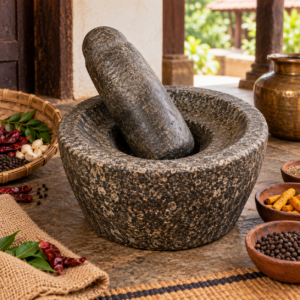
2. Kodava Name
Kadiyo Kall
3. English Name
Traditional Grinding Stone
4. Alternate Names
Kadiyo Kall, Grinding Stone, Stone Grinder, Stone Mortar and Pestle
5. Short Description
Kadiyo Kall is a traditional stone grinding implement used for crushing and grinding food ingredients. It consists of a heavy, hollowed stone base and a separate stone pestle operated by hand.
6. Full Description
The Kadiyo Kall was an important grinding implement in the traditional household kitchen. Made from heavy, durable stone, it provided a simple but effective means of crushing and grinding ingredients without the need for mechanical or electric equipment.
The main stone has a deep circular cavity into which ingredients are placed. A heavy, rounded stone pestle is then moved manually within the cavity, crushing and grinding the contents through repeated pressure and movement.
Such grinding stones were particularly suited to preparing small quantities of ingredients and allowed the user to control the degree of grinding according to the preparation. The Kadiyo Kall represents the self-sufficient nature of traditional kitchens, where locally available stone was transformed into a durable household tool.
7. Traditional Use
- Grinding food ingredients
- Crushing spices and other ingredients
- Preparing ingredients for cooking
- Making pastes and coarse mixtures
- Processing small quantities by hand
8. Design & Form
The Kadiyo Kall consists of two principal stone components:
- A heavy, rounded or cylindrical stone base with a deep central cavity
- A separate elongated, rounded grinding stone used as the pestle
The weight of the stones provides the pressure required for effective grinding.
9. Materials
Hard natural stone, selected for its strength and resistance to repeated grinding.
10. Method of Making
A suitable block of hard stone would be selected and shaped into a sturdy base. The centre would then be carefully hollowed out and smoothed to create the grinding cavity.
A separate stone would be shaped into an elongated pestle that could be comfortably held and repeatedly moved within the cavity.
11. Variants / Types
Variations could occur in:
- Size of the grinding base
- Depth and width of the cavity
- Shape and size of the pestle
- Type of stone used
The size would generally depend on the quantity and type of ingredients intended to be processed.
12. Cultural / Functional Significance
Kadiyo Kall represents the traditional knowledge of food preparation and household self-sufficiency.
It also demonstrates the practical use of natural materials, particularly stone, to create implements that could withstand years of repeated use.
13. Historical Context
Grinding stones formed an important part of traditional kitchens before the introduction of electric mixers, grinders and other mechanised kitchen appliances.
The Kadiyo Kall reflects an earlier period when food preparation depended heavily on manual labour and durable implements that could be maintained and used for generations.
14. Traditional Location / Setting
Kadiyo Kall would traditionally be found in the household kitchen or food-preparation area, where ingredients were ground as part of daily cooking.
15. Craftsmanship / Special Features
The most distinctive feature is the deep grinding cavity combined with the heavy stone pestle.
Creating a smooth and suitably shaped cavity in hard stone required considerable labour and knowledge of stoneworking. The substantial weight of the implement also helped make grinding more efficient.
16. Reason for Decline
The use of Kadiyo Kall declined with the widespread availability of:
- Electric mixers and grinders
- Modern food processors
- Ready-made spice powders
- Mechanised food-processing equipment
Changing kitchen layouts and lifestyles also reduced the need for large, heavy stone implements.
Comments
Leave a comment!Login for Post Comment
Last posts