

Aipani
Contents
Aipani – Traditional Paddy Cultivation in Kodagu
About Aipani
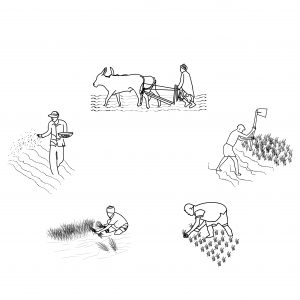
Aipani refers to the five important stages of work traditionally carried out in paddy fields during the rainy season in Kodagu. Paddy cultivation has long been an integral part of the agricultural life and rural heritage of the Kodava people.
With the arrival of the monsoon, fields are prepared, seeds are sown, seedlings are raised and transplanted into prepared fields. These activities require knowledge of the soil, rainfall, water levels and the right time to carry out each task.
Traditionally, paddy cultivation was not merely an agricultural activity. It brought people together through shared labour, cooperation and a close connection with the land. The seasonal cycle of cultivation reflected the community’s understanding of nature and its dependence on the monsoon.
The Five Stages of Aipani
1. Uppo (Ploughing)
Uppo is the preparation of the paddy field through ploughing. The soil is loosened and turned to prepare it for sowing and subsequent cultivation.
Traditionally, ploughing was carried out using agricultural implements drawn by cattle. The farmer’s knowledge of the soil, water and seasonal conditions was essential to preparing the field for the next stage.
2. Bith idvo (Sowing)
Bith Idvo refers to sowing paddy seeds. After preparing the field or nursery area, seeds are sown so that they can germinate and develop into young seedlings.
The selection of suitable seeds and the timing of sowing are important to the success of the crop. This stage marks the beginning of the new agricultural cycle.
3. Anda Kethvo (Bund trimming)
Anda Kethvo refers to trimming and maintaining the bunds around paddy fields. Bunds help retain water in the fields and regulate its movement between different sections.
Maintaining these boundaries is an important part of paddy cultivation, particularly in areas where fields depend on monsoon rainfall and controlled water levels.
4. Agae Pani (Plucking seedlings)
Agae Pani is the work of removing young paddy seedlings from the nursery once they are ready for transplanting.
The seedlings must be handled carefully so that they can be transferred to the main field with minimal damage. This stage prepares the young plants for the next phase of cultivation.
5.Naati Pani (Transplanting)
Naati Pani refers to transplanting the young paddy seedlings into the prepared field. Seedlings are planted in the wet field, where they continue to grow and mature.
Transplanting is labour-intensive and traditionally involves coordinated work by several people. Proper spacing and careful planting help establish the crop for its growing season.
Community Participation in Aipani
Traditional agricultural work in Kodagu relied on cooperation and the exchange of labour. The original KodavaClan account identifies two arrangements associated with the workforce:
- Mui Aal – Kood Aal : Traditional forms of shared or cooperative labour.
- Regular wages: Labour undertaken in return for payment.
These arrangements reflect how agricultural communities organised the work required during the busy cultivation season.
Aipani and Kodava Heritage
Aipani represents more than the sequence of tasks involved in growing paddy. It preserves knowledge of seasonal farming, field preparation, water management, seedling care and collective effort.
As agricultural practices change, documenting the traditional terminology and methods of Aipani helps preserve an important part of Kodagu’s rural history and the vocabulary of Kodava Thaak.
KodavaClan Heritage records these practices so that future generations can understand the agricultural knowledge, language and community traditions that shaped life in Kodagu.
Comments
Leave a comment!Login for Post Comment
Last posts