

Koopadhi Kool
Contents
Koopadhi Kool – A Kodava Tradition Celebrating Motherhood
Koopadhi Kool is a traditional Kodava custom associated with pregnancy and the celebration of impending motherhood. It involves preparing and serving a variety of dishes to an expectant woman, usually during the seventh or ninth month of pregnancy. The occasion brings together close family members and friends to express their affection, offer their blessings, and wish the mother-to-be a safe delivery and the well-being of her child.
The tradition reflects the importance of family relationships, food, and emotional support in Kodava culture. 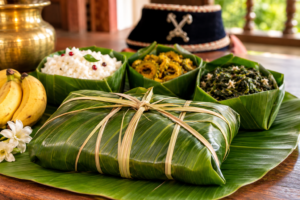
Timing of the Tradition
Koopadhi Kool is generally observed during the seventh or ninth month of pregnancy. It is an occasion dedicated to the expectant mother, during which her close relatives and friends gather to celebrate her journey towards motherhood.
Traditional Food Preparations
Food is central to the observance of Koopadhi Kool. An odd number of varieties of food is traditionally prepared for the expectant mother. The dishes are selected with care, taking into consideration her preferences and the family’s customary practices.
Three dishes are considered essential to the Koopadhi Kool feast along with all other typical kodava cusine
- Moor Kool: Curd rice.
- Kaipake Curry: Bitter gourd curry.
- Kakke Thoppu: A preparation made using black nightshade greens.
Other dishes are prepared according to the expectant mother’s preferences and the family’s traditions.
Traditional Wrapping and Presentation
The food prepared for Koopadhi Kool is traditionally wrapped in banana leaves and secured with threads made from the banana stem. This traditional method of wrapping reflects the use of natural materials in Kodava food customs. The banana-leaf parcels hold the lovingly prepared dishes together, making the presentation an integral part of the customary practice.
The Significance of the Bride’s Family
One of the important aspects of Koopadhi Kool is its association with the woman’s parental family and relatives.
During her childhood and teenage years, the girl grows up surrounded by her parents, siblings, cousins, and other relatives. These family members become familiar with her likes, dislikes, favorite foods, and personal preferences.After marriage, when she moves into her husband’s household, she enters a new family environment. Although she becomes part of her marital family, she may sometimes hesitate to ask for particular dishes or express her food preferences freely.
Koopadhi Kool provides an opportunity for her parental family and relatives to demonstrate their affection by preparing the foods she enjoys. Since they have known her from childhood, they can often anticipate her preferences without her having to express them.
An Expression of Love and Understanding
Koopadhi Kool represents more than the preparation of a special meal. It reflects the intimate understanding that develops between a woman and the family members with whom she has grown up.The dishes prepared for the occasion are a reminder that her preferences are remembered and valued. Through this gesture, her relatives provide comfort and reassurance during an important stage of her life.
The tradition also acknowledges that, despite marriage and the transition into a new household, the bond between a woman and her parental family remains strong.
Family Bonds and Emotional Support
The gathering of relatives and friends for Koopadhi Kool reinforces family relationships and provides an opportunity to celebrate the expectant mother collectively.
The tradition highlights the role of the extended family in supporting a woman during pregnancy. The care expressed through the preparation of food, the gathering of loved ones, and the sharing of blessings contributes to the emotional significance of the occasion.
Cultural Significance
Koopadhi Kool forms part of the traditional customs through which the Kodava community recognizes important stages in family life. It combines food, kinship, affection, and the celebration of motherhood in a single observance.
The practice of preparing an odd number of dishes, including the customary Moor Kool, Kaipake Curry, and Kakke Thoppu, preserves distinctive elements of Kodava food culture.
Equally significant is the underlying sentiment: the expectant mother is surrounded by people who know her well, remember what she enjoys, and wish to make her feel loved and cared for.
Comments
Leave a comment!Login for Post Comment
Last posts