

Keep Thook / Cape thook
Capethok / Keep thok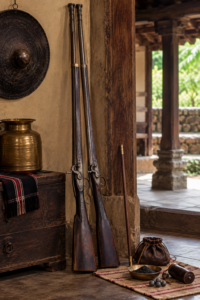
English Name
Cap Muzzle-Loading Gun / Caplock Gun
Alternate Names
Capethok; Cap Thook; caplock muzzle-loader.
The word “Cape” is understood to be a later corruption of the original “Cap”.
Short Description
A traditional caplock muzzle-loading firearm that used a percussion cap for ignition instead of the earlier burning wick mechanism.
Full Description / Long Description
Capethok represents a later stage in the evolution of traditional firearms. Unlike the earlier Thiri Thook, which depended on a burning wick for ignition, the Capethok used a small percussion cap fitted to the lock mechanism. The firearm was muzzle-loaded, with the charge and projectile introduced through the front of the barrel. Its long barrel and wooden stock gave it the characteristic appearance of the traditional long gun. Capethok became part of the established firearm tradition of Kodagu and continued the strong association of firearms with Kodava martial, hunting and social traditions.
Traditional Use
Used for hunting, protection and martial purposes. Like earlier firearms, gunfire could also have a signalling role during important occasions and events in the community.
Design & Form
A long wooden stock with a long metal barrel, percussion-cap ignition mechanism, trigger and ramrod. Traditional examples could have simple or decorated metal fittings and varying barrel lengths.
Materials
Wood for the stock; iron or steel for the barrel and lock mechanism; brass or other metal for selected fittings; percussion caps for ignition.
Method of Making / Construction
The wooden stock was shaped to accommodate the barrel and lock. The metal barrel and caplock mechanism were fabricated and fitted to the stock, with a ramrod provided for the muzzle-loading process.
Variants / Size
Examples may differ in barrel length, stock proportions, metal fittings, decoration and overall weight. Double-barrel and single-barrel forms may also be encountered.
Cultural / Functional Significance
Capethok strengthened the place of firearms in Kodava tradition. It represented the technological progression from Pondhi and Thiri Thook to more advanced firearms while retaining the firearm’s important association with Kodava identity, courage and martial heritage.
Historical Context
Capethok belongs to the period following the earlier Thiri Thook. The change from wick ignition to percussion-cap ignition made the firearm a more advanced form of muzzle-loader. The traditional name Capethok is important to record, as “Cape” is understood to have developed as a corruption of the original word Cap.
Traditional Location / Setting
Traditional Kodava homes, weapon-storage areas and locations associated with hunting, protection, ceremonial occasions and martial traditions.
Craftsmanship / Special Features
Its defining feature is the percussion-cap ignition system. The long barrel, wooden stock and traditional metalwork give surviving examples considerable historical and craft value.
Reason for Decline
Capethok eventually became obsolete as modern breech-loading and repeating firearms became available, while changes in hunting practices, regulations and household life further reduced its everyday use.
Revival & Continued Use
Surviving Capethok firearms can be preserved as heritage objects in museums, private collections and traditional homes. Documentation of their names, forms, ownership histories and cultural associations can help preserve this part of Kodava history.
Preservation
Surviving examples should be stored in appropriate dry, controlled conditions to protect the wooden stock and metal components. The firearm, percussion-cap mechanism, ramrod and associated accessories should be photographed and documented without altering the original object.
Historical & Cultural Importance
Capethok represents an important technological and cultural transition in Kodava firearm history—from the wick-fired Thiri Thook to the percussion-cap muzzle-loader. It demonstrates how firearms became firmly embedded in Kodava martial and social traditions and preserves the memory of an important stage in the community’s material heritage.
Comments
Leave a comment!Login for Post Comment
Last posts