

Kadawoo
Contents
KADAWOO
1. Object Name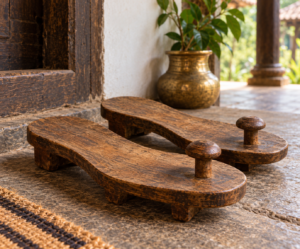
Kadawoo
2. Kodava Name
Kadawoo
3. English Name
Traditional Wooden Slippers
4. Alternate Names
Kadawoo, Wooden Slippers, Wooden Sandals
5. Short Description
Kadawoo are traditional wooden slippers used as footwear in earlier Kodava households. Made primarily from wood, they provided a simple and durable means of protecting the feet while walking around the home and its surroundings.
6. Full Description
The Kadawoo is a simple example of traditional Kodava footwear made from wood. Unlike modern footwear manufactured from rubber, leather or synthetic materials, wooden slippers were fashioned from locally available timber and shaped to accommodate the feet.
Their sturdy construction made them suitable for everyday movement around traditional homes, courtyards and other household surroundings. The object reflects an earlier period when many everyday necessities were produced using natural materials and local craftsmanship.
The Kadawoo is particularly valuable as a museum object because it demonstrates how even an ordinary household item such as footwear formed part of the material culture of traditional Kodava life.
7. Traditional Use
- Worn as everyday footwear
- Used while walking around the household
- Provided protection for the soles of the feet
- Suitable for movement around traditional homes and courtyards
8. Design & Form
Kadawoo were designed as simple, solid wooden foot coverings. The wooden base was shaped to roughly follow the form of the foot, providing a firm surface underneath.
The design emphasised simplicity, durability and practicality rather than decoration.
9. Materials
Wood was the principal material used in making Kadawoo.
10. Method of Making
A suitable piece of timber would be selected and cut to the approximate shape of a foot. It would then be shaped and carved to form the sole and upper portion of the slipper.
The surfaces and edges would be smoothed sufficiently for comfortable use, while the thickness of the wood provided strength and durability.
11. Variants / Types
Variations could occur according to:
- Size
- Shape
- Type of wood used
- Simplicity or degree of shaping
12. Cultural / Functional Significance
Kadawoo represents the practical ingenuity of traditional household life. It demonstrates how locally available natural materials could be transformed into useful everyday objects.
As footwear, it also provides an insight into the ordinary routines and material environment of earlier generations.
13. Historical Context
Kadawoo belongs to the period when many household requirements were met through locally made and reusable objects rather than factory-produced goods.
Its use reflects an earlier form of everyday footwear that gradually disappeared as commercially manufactured shoes and slippers became readily available.
14. Traditional Location / Setting
Kadawoo would have been used around the traditional household, courtyard and surrounding domestic spaces, where simple and durable footwear was practical.
15. Craftsmanship / Special Features
The defining feature of Kadawoo is its wooden construction. Shaping a solid piece of timber into a wearable form required basic woodworking and carving skills.
The object illustrates the traditional principle of using a readily available material for a practical household purpose.
16. Reason for Decline
The use of wooden slippers declined with the widespread availability of:
- Rubber slippers
- Leather footwear
- Canvas and cloth footwear
- Modern manufactured shoes
- Lightweight synthetic sandals
Modern footwear offered greater flexibility, comfort and convenience.
17. Revival & Continued Use
Kadawoo can be revived as part of heritage exhibitions, museum collections and demonstrations of traditional Kodava household life.
Recreating the slippers using traditional woodworking techniques would also help document the craft associated with them.
Comments
Leave a comment!Login for Post Comment
Last posts