

Mori
Contents
Mori
1. Object Name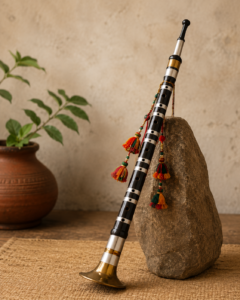
Mori
2. Kodava Name
Mori
3. English Name
Flute-like Wind Instrument
4. Alternate Names
Mori is the traditional name used for this instrument in the context of Valaga.
5. Short Description
Mori is a traditional flute-like wind instrument used as part of the Valaga, the traditional Kodava musical ensemble.
6. Full Description
Mori is a long, slender wind instrument with a cylindrical body and a flared bell at one end. It is played by blowing air through the mouthpiece and using the finger holes along the body to produce different notes.
In Valaga, Mori contributes the wind-instrument element to the ensemble, complementing the powerful rhythms of the traditional drums and other instruments. Its distinctive appearance, with contrasting bands along the body and a metal bell, makes it a recognisable component of the traditional musical ensemble.
7. Traditional Use
Mori was used during Valaga, particularly in traditional musical performances accompanying ceremonies, gatherings and processions.
8. Design & Form
The Mori has a long, narrow cylindrical body with a series of finger holes. One end accommodates the mouthpiece, while the other terminates in a flared bell that projects the sound.
Traditional examples may feature contrasting decorative bands along the instrument.
9. Materials
The instrument may incorporate:
- Wood or other tubular material for the main body
- Metal, particularly brass, for the bell and fittings
- Decorative bands or bindings
10. Method of Making
The main body is formed as a long tubular instrument with carefully positioned finger holes. The mouthpiece is shaped to allow controlled airflow, while a flared metal bell may be fitted to the opposite end to enhance sound projection.
11. Variants / Types
Variations may occur in:
- Length
- Diameter
- Number and arrangement of finger holes
- Shape and size of the bell
- Decorative bands and finishes
- Materials used in construction
12. Cultural / Functional Significance
Mori forms part of the musical tradition of Valaga. Its melodic sound provides contrast to the strong rhythmic sounds of the percussion instruments used in the ensemble.
13. Historical Context
Mori belongs to the traditional musical heritage of Kodagu and is associated with the Valaga tradition, in which different instruments are brought together for ceremonial and community occasions.
14. Traditional Location / Setting
Mori was traditionally played during:
- Valaga performances
- Traditional ceremonies
- Community gatherings
- Processions and other important occasions
15. Craftsmanship / Special Features
The instrument requires careful craftsmanship, particularly in creating the tubular body, positioning the finger holes and fitting the bell.
The alternating black-and-white bands seen on traditional examples give Mori a distinctive visual character.
16. Reason for Decline
The traditional use of Mori has declined with changes in ceremonial practices and the increasing use of modern musical instruments and amplified sound systems.
17. Revival & Continued Use
The preservation of Valaga and traditional Kodava music provides an opportunity for Mori to continue being played. Demonstrations, cultural programmes and traditional ceremonies can help introduce the instrument to younger generations.
18. Preservation
Preservation of Mori should include:
- Photographing surviving instruments
- Recording dimensions and construction details
- Documenting the materials used
- Recording the fingering and playing technique
- Recording traditional tunes and performances
- Documenting its role within the Valaga ensemble
- Collecting oral histories from traditional musicians
19. Historical & Cultural Importance
Mori represents the wind-instrument tradition within the Valaga musical ensemble of Kodagu. Its long form, finger holes and flared bell reflect a traditional approach to creating a portable instrument capable of producing a strong melodic sound.
Together with the drums and other instruments of Valaga, Mori contributes to the distinctive musical atmosphere of traditional Kodava ceremonies and gatherings. Preserving the instrument in the Modha Goode Virtual Museum therefore helps document not only an individual musical object, but also the musicians, sounds, craftsmanship and ceremonial traditions associated with Kodava cultural heritage.
Comments
Leave a comment!Login for Post Comment
Last posts