

Thott
Contents
Thott 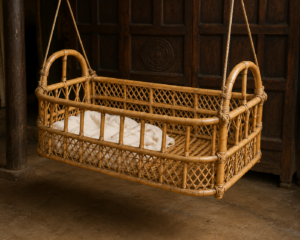
1. Object Name
Thott
2. Kodava Name
Thott
3. English Name
Traditional Cradle
4. Alternate Names
No alternate name is specified in the source provided.
5. Short Description
Thott is a traditional cradle used for infants in Kodava households. It was traditionally made from cane or wood.
6. Full Description
The Thott was an essential household object associated with the care of infants in traditional Kodava homes. Cradles were made using materials available locally, particularly cane and wood, reflecting the practical craftsmanship of traditional households.
The cane form would have been lightweight and suited to the skills of local basket and cane craftsmen, while wooden versions provided a more solid and permanent construction.
7. Traditional Use
The primary purpose of the Thott was to hold and gently rock infants. It provided a dedicated resting and sleeping space for babies within the household.
8. Design & Form
The Thott generally took the form of a small cradle or suspended cradle, designed to safely support an infant while allowing gentle movement.
Its form could vary depending on whether it was made from cane or wood.
9. Materials
Traditional Thott was made from:
- Cane
- Wood
10. Method of Making
Cane cradles were constructed by shaping and weaving cane into a strong cradle body. Wooden versions were made by shaping and joining wooden components to create a sturdy cradle.
The precise traditional construction methods may have varied between families and craftsmen.
11. Variants / Types
The principal material-based variants were:
- Cane Thott
- Wooden Thott
Differences could also occur in size, shape and method of suspension.
12. Cultural / Functional Significance
The Thott reflects the importance of infant care within the traditional Kodava household. It was a practical domestic object, but also part of the everyday environment in which children were raised.
13. Historical Context
The Thott belongs to the traditional household material culture of Kodagu, from a period when domestic objects were commonly made using locally available natural materials.
14. Traditional Location / Setting
The cradle would have been kept inside the traditional Kodava house, in a suitable area where the infant could be cared for by family members.
15. Craftsmanship / Special Features
The Thott demonstrates the traditional use of cane weaving and woodworking for household purposes. Its construction needed to be sufficiently strong and stable to safely support an infant while permitting gentle rocking.
16. Reason for Decline
The traditional Thott gradually became less common as modern commercially manufactured cradles, cots and baby furniture became widely available.
Changes in household design and lifestyle also contributed to the disappearance of many traditional domestic implements.
17. Revival & Continued Use
Although traditional Thott cradles are now uncommon, surviving examples can be preserved as important objects of Kodava domestic heritage.
Cane and wooden cradles may also inspire renewed interest in traditional craftsmanship and sustainable household objects.
18. Preservation
Preservation of Thott should include:
- Photographing surviving examples
- Recording their dimensions
- Documenting the type of cane or wood used
- Recording traditional construction techniques
- Documenting how the cradle was suspended and used
- Collecting oral histories from elders who remember its use
19. Historical & Cultural Importance
The Thott represents an intimate aspect of traditional Kodava domestic life—the care of infants within the household. Made from cane or wood, it demonstrates how everyday necessities were produced using locally available materials and traditional craftsmanship.
Beyond its practical function as a cradle, the Thott provides an insight into the domestic environment of earlier generations of Kodavas. Its preservation in the Modha Goode Virtual Museum helps document the household objects, craftsmanship and family practices that formed an important part of Kodagu’s living heritage.
Comments
Leave a comment!Login for Post Comment
Last posts