

Adcha
Contents
Adcha (ಅಡ್ಚ) 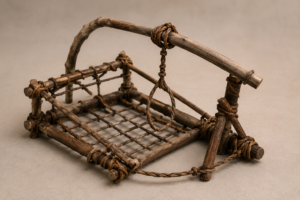
Overview
Adcha is a traditional hunting trap associated with the forest and rural life of Kodagu. It was historically used in hunting practices to capture wild animals and reflects the indigenous knowledge that earlier generations developed through close familiarity with the forests, hills and wildlife of the region.The Adcha is part of the material culture associated with traditional hunting and survival practices in Kodagu.
Traditional Knowledge
For generations, the people of Kodagu lived in close interaction with forests, plantations and agricultural land. Knowledge of animal behaviour, forest paths, tracks and seasonal movement formed an important part of traditional outdoor knowledge.The Adcha represents one aspect of this knowledge. Its use depended not only on the object itself, but also on an understanding of the surrounding environment and the habits of wildlife.
Connection with Hunting Traditions
Hunting historically formed part of life in the forested landscapes of Kodagu. It could be associated with obtaining food, protecting crops and livestock, and responding to encounters with wild animals.Traditional hunting equipment varied according to the animal, terrain and purpose. The Adcha belonged to this wider collection of indigenous tools and practices.
Design and Material Culture
Traditional traps such as the Adcha were generally made using materials that were readily available in the local environment. Their construction reflected the practical ingenuity of communities accustomed to working with wood, fibre, rope and other natural materials.
Because such objects were made for practical use, individual examples could differ in size, form and construction according to local knowledge and purpose.
Heritage Significance
The Adcha is significant not because of its use today, but because it provides a window into the traditional relationship between the people of Kodagu and their natural environment.It represents a period when knowledge of forests and wildlife was passed largely through experience and from one generation to another.
Today, an Adcha preserved in a museum can help document this traditional knowledge while also encouraging an understanding of how attitudes toward wildlife and conservation have evolved.
Museum Note
The Adcha is preserved as a historical hunting artefact representing traditional forest knowledge and material culture in Kodagu. Its presence in the museum helps future generations understand the skills, environments and ways of life of earlier communities, while recognising the importance of modern wildlife protection and conservation.
Virtual Modha goode
- Virtiual Modhagood – The virtual Museum of Kodava Heritage.
Comments
Leave a comment!Login for Post Comment
Last posts