A living archive of Kodagu — objects, memories, skills and the voices of the people who kept them. See what's on display →
Explore / Paliya Kathi
Paliya Kathi
Other

Paliya Kathi

Traditional Vegetable-Cutting Knife and Coconut Grater
Also written: Paliya Kathi - ಪಳಿಯ ಕತ್ತಿ

Virtual Museum of
Kodava Heritage

Help Preserve

This Piece of Kodava Heritage

Your support helps us preserve our heritage
for today and future generations.

Support as
a Custodian
₹1,500
per artifact
About the Object

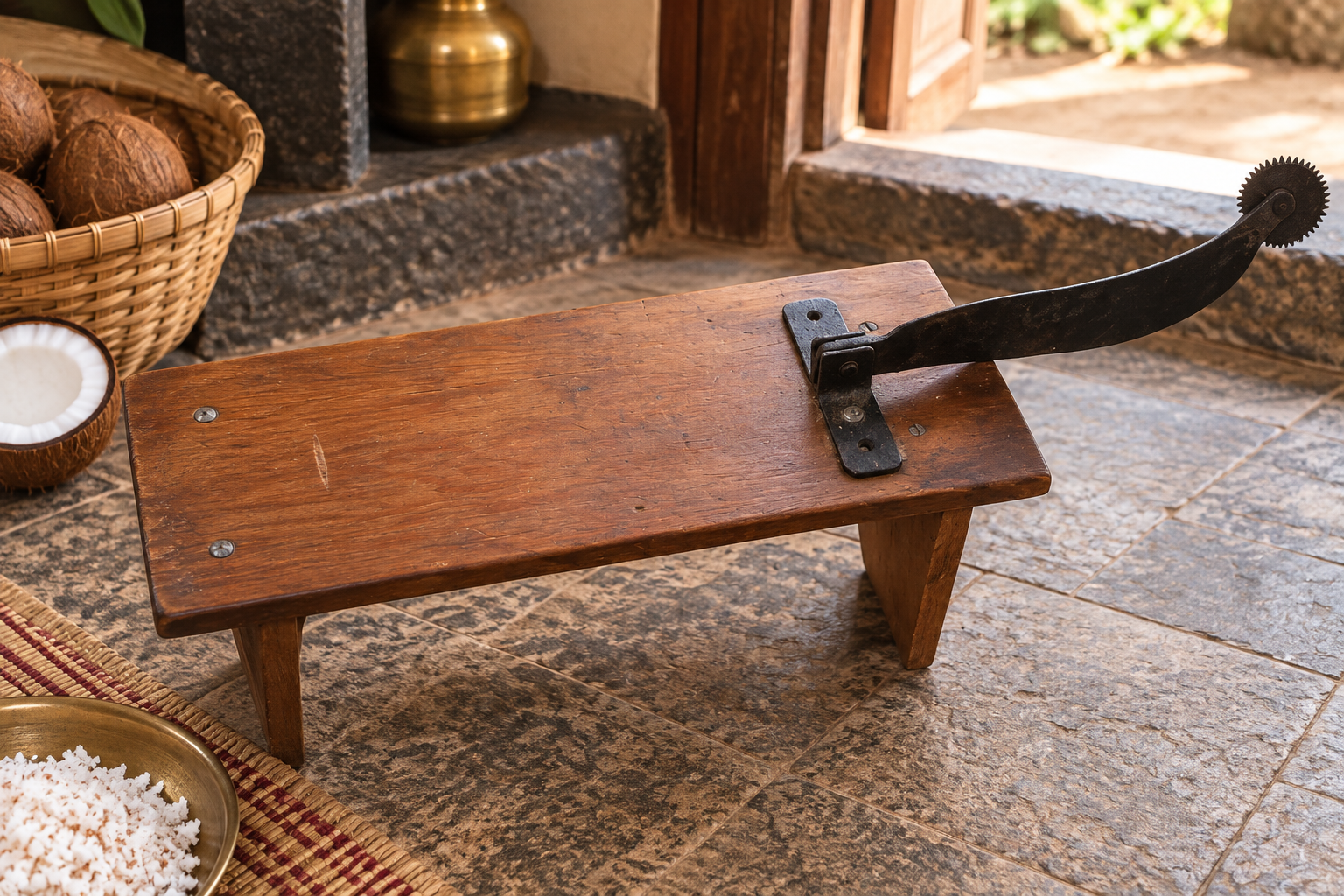
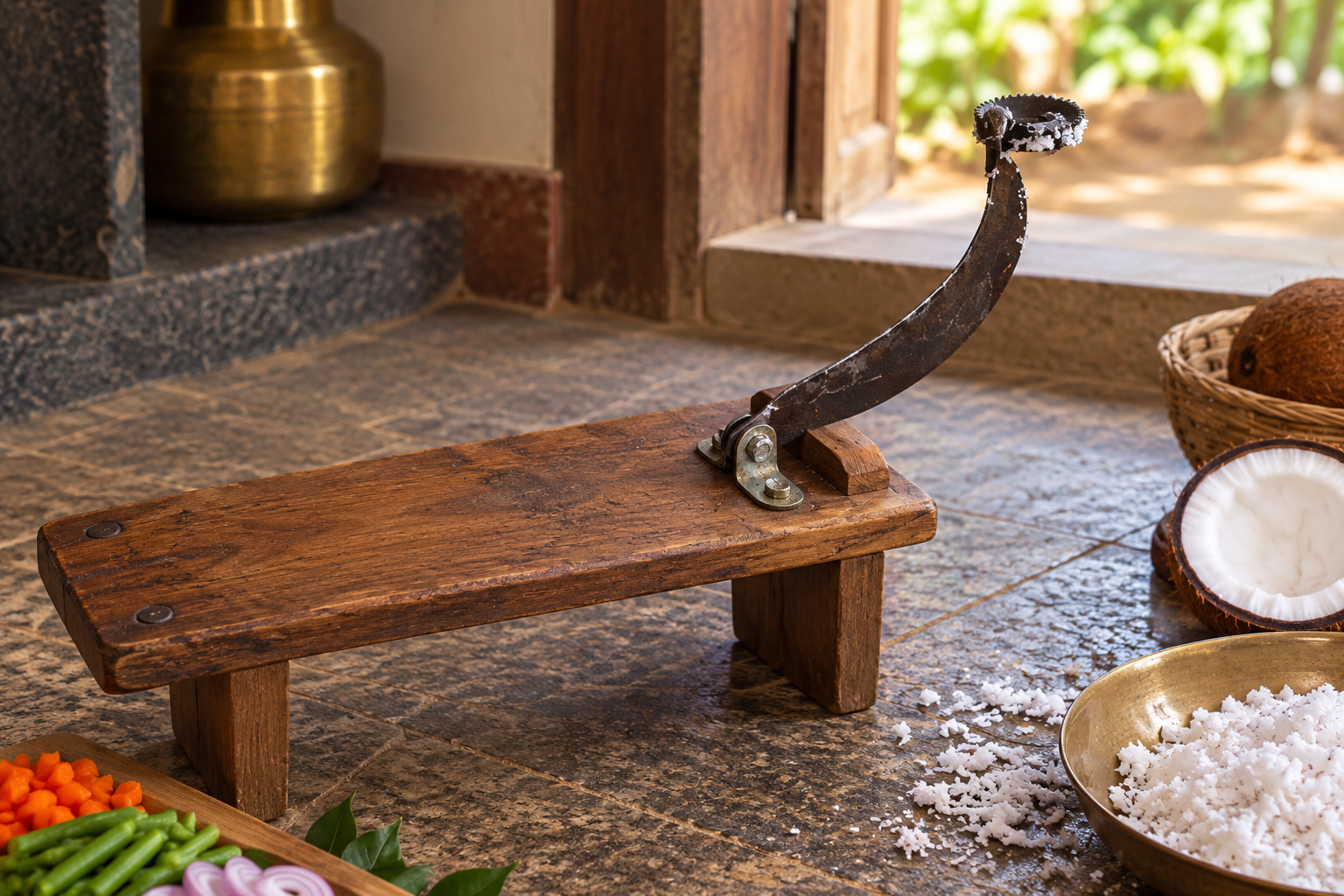
A traditional wooden kitchen platform fitted with a curved metal knife and a serrated circular coconut-grating blade.

Paliya Kathi is a traditional kitchen implement consisting of a low wooden platform with a specially shaped metal cutting blade fixed securely to one end. The curved blade faces inward towards the user, making it convenient for cutting and preparing vegetables while seated on the floor. At the tip of the curved metal section is a circular serrated grater, positioned horizontally so that coconut can be scraped against it. The combination of cutting and grating functions made the implement a practical part of the traditional kitchen.

How It Was Used

Traditional use: Used for cutting vegetables and other kitchen ingredients, as well as scraping fresh coconut with the serrated grater.

Cultural significance: Paliya Kathi reflects the practical design of traditional kitchens, where food preparation was commonly performed while seated or working close to the floor. Combining cutting and coconut-grating functions in one implement made efficient use of limited kitchen space.

Historical context: The implement belongs to the traditional material culture of the Kodava kitchen, from a period when food preparation depended largely on locally made wooden and forged-metal implements. Its form reflects the cooking practices of households where vegetables and coconut were prepared manually for everyday meals.

Material & Making
WoodIron

The wooden platform is shaped and assembled with short supporting legs. The metal blade is forged into its characteristic curved form and securely attached to the platform using a metal mounting plate and fasteners. The serrated circular grater is fixed at the outer end of the curved metal section.

Who Used It? / Where? / When?
OwnershipNot yet recorded
Period Pre-colonial
Status of traditionNearly extinct
The Tradition Today

Reason for decline: The Paliya Kathi declined with the introduction of modern kitchen knives, cutting boards, stainless-steel coconut graters, mixer-grinders and other factory-made kitchen equipment

Revival efforts: It can be preserved through heritage kitchens, traditional cooking demonstrations, museums and documentation of older household practices. Traditional cooks and craftsmen can help record how the implement was positioned and used.

Sources
KodavaClan archive
Reference link