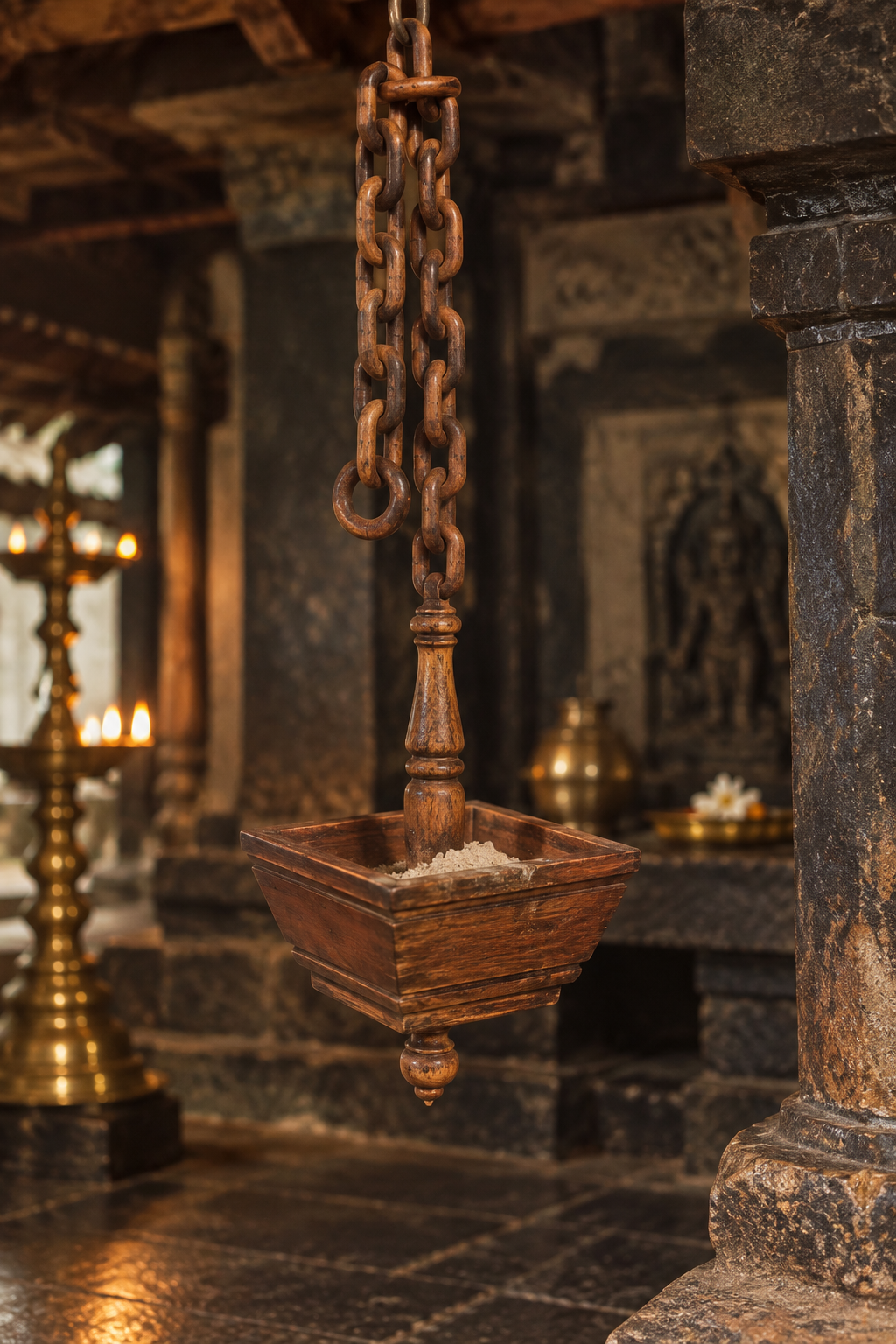
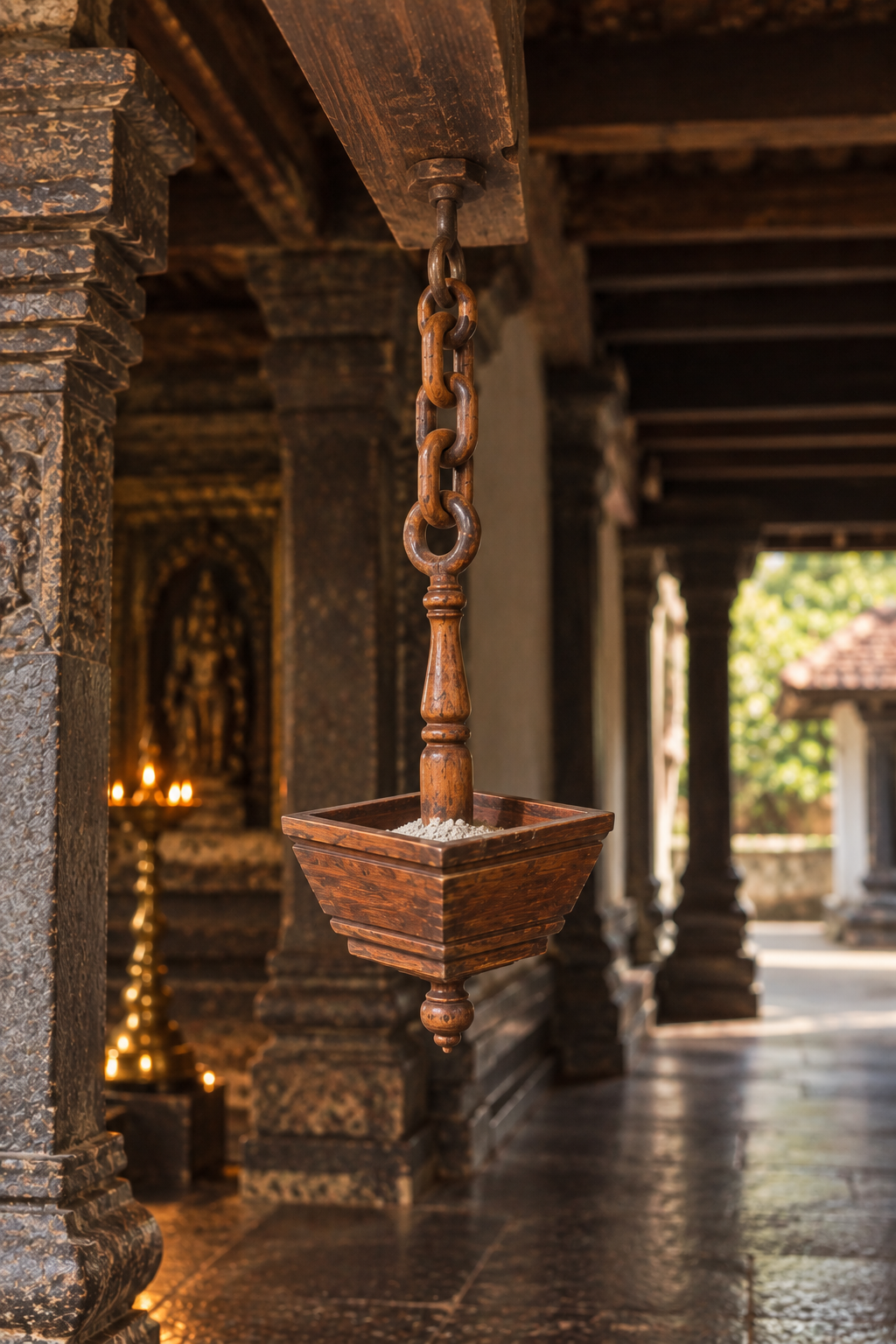
Kuri Kotta is a small wooden receptacle traditionally used for keeping sacred ash. The example shown consists of a wooden container suspended by a chain, allowing it to be hung in a designated place. Its elevated form makes the sacred ash readily accessible while keeping the container securely positioned.
Traditional use: Its making reflects traditional woodworking skills, particularly the shaping of small functional wooden containers and the construction of simple suspension mechanisms.
Cultural significance: Kuri Kotta is associated with the keeping of sacred ash and with traditional religious spaces. The sacred ash is an important part of customary worship and religious observances.
Kuri Kotta represents the intersection of woodcraft, sacred practice and traditional Kodava spaces. Its association with the Ainmane, Nellakki, temples and village shires makes it an important example of the material objects through which sacred practices were maintained and passed between generations.
Historical context: There is a possibility that the tradition of Kuri Kotta may have migrated from neighbouring Kerala, reflecting the historical cultural interactions between Kodagu and Kerala. Traditionally, it was kept in sacred areas of the Ainmane, especially in the Bade near the Nellakki, and was also used in temples and village shires.
The wooden container is carved and shaped by hand, with the central support and base carefully formed. A chain or similar suspension arrangement is attached to allow it to be hung securely.
Reason for decline: While the traditional form was made primarily of wood and suspended using a chain, later examples may vary in construction and materials. Modern containers have also replaced such traditional holders in some places.
Revival efforts: Traditional examples survive as part of the material heritage of Ainmanes, temples and other sacred spaces. Their use may continue in places where customary practices are maintained.
You are preserving Kuri Kotta.