

Andhol (ಆಂಧೋಲ್) — Funeral Bier
Contents
Andhol (ಆಂಧೋಲ್) — Funeral Bier
Overview
The Funeral Andhol is a traditional platform with a domed framework made from bamboo and cane, used to carry the deceased during funeral rites in Kodagu.Unlike the ceremonial palanquin, this form of Andhol belongs to the solemn traditions surrounding a person’s final journey. Its construction and use reflect the dignity, respect and communal responsibility associated with traditional Kodava funeral practices.
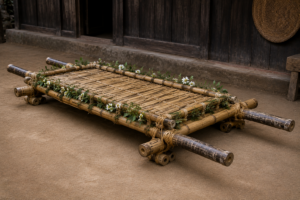
Traditional Construction
The funeral Andhol was constructed as a sturdy raised platform. Holigarna wood was traditionally used for the wooden components, while bamboo and cane were used to create the characteristic supporting and domed framework sometimes.The framework could be woven or tied together using natural fibres, creating a strong but relatively lightweight structure that could be carried by several people.
The Domed Structure 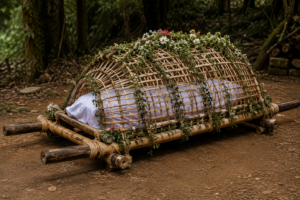
One of the most distinctive features of the funeral Andhol is its arched or dome-shaped bamboo-and-cane framework.The deceased was placed respectfully on the platform and covered with cloth. The domed framework provided a dignified enclosure over the body and could be adorned with flowers, leaves and other natural materials as part of the funeral rites.
The Final Journey
The Funeral Andhol was carried by family members, relatives or members of the community as the deceased was taken from the home to the place of cremation or burial.The act of carrying the deceased collectively reflects the importance of community participation in traditional Kodava funeral customs.
Keek Mara ( Holigarna Wood )
The use of Holigarna wood in the funeral structure is an important element of its traditional material culture.Together with bamboo, cane and natural foliage, the wood provided a combination of strength, flexibility and locally available materials suited to the construction of the funeral bier. this can be either as cot or chair.This knowledge of materials forms an important part of the traditional craftsmanship associated with the Andhol.
Cultural Significance
The Funeral Andhol is not simply a means of transporting the deceased. It is part of a solemn cultural practice that expresses respect for the dead and responsibility towards the family and community.Its simple natural construction also reflects an older way of life in which important ceremonial objects were created from materials available within the local environment.
Heritage Significance
The Funeral Andhol preserves valuable knowledge about traditional Kodava funeral practices, craftsmanship and the use of natural materials.As contemporary funeral practices and materials have changed, traditional structures such as the Andhol have become increasingly rare. Documenting and preserving them helps future generations understand the customs surrounding the final journey of earlier Kodava communities.
Over time, the traditional term Andhol has gradually been replaced in Kodava usage by “Chatta” (ಚಟ್ಟ), a term that came into wider use through the influence and adoption of terminology from Kannada. This linguistic shift reflects the way vocabulary can evolve as communities interact with neighbouring languages and changing social practices.
Virtual Modha goode
- To see many articles like these click on Virtiual Modhagood – The virtual Museum
Comments
Leave a comment!Login for Post Comment
Last posts