

Cheepe
Contents
Cheepe ಚೀಪೆ – Traditional Kodava Broom
English Name: Traditional Broom
Alternate Name: Shrub broom, palm broom, coconut-leaf broom 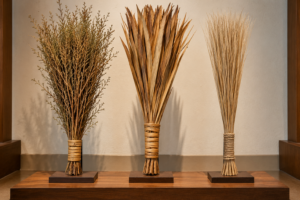
Cheepe is a traditional broom used in Kodava households for cleaning homes, courtyards and surrounding spaces. Traditionally, three types were made using different plant materials: Kurunthotti choolu, Phoenix acaulis and coconut-leaf bristles. Each represents the use of locally available natural resources to meet everyday household needs.
Cheepe reflects the traditional knowledge and resourcefulness of Kodava households, where cleaning implements were prepared from natural plant materials. Before factory-made brooms became widely available, people used different types of plant fibres, stems and bristles suited to their household requirements.
Three traditional forms of Cheepe are identified: Kurunthotti choolu, made from the plant locally known as Kurunthotti; a broom made from Phoenix acaulis, a small, stemless palm; and a broom made from the stiff bristles or midribs of coconut leaves.
These variations demonstrate how people used the natural vegetation available in their surroundings to make practical household tools. The materials and construction of each type determined its suitability for different sweeping tasks.
Traditional Use
Cheepe was used for sweeping indoor floors, verandahs, courtyards and outdoor spaces around traditional homes. Depending on the material used, different varieties could be suited to finer cleaning or the removal of leaves and other debris.
Cultural Significance
Cheepe represents traditional household skills, environmental awareness and the use of indigenous plant resources. Knowledge of selecting, preparing and binding plant materials into useful implements formed part of everyday rural life and was often passed down through generations.
Historical Context
In earlier Kodava households, domestic implements were commonly made from materials available in the local landscape. Kurunthotti, Phoenix acaulis and coconut leaves offered different raw materials for broom-making.The continued documentation of these three types is important for preserving the specific botanical and practical knowledge associated with traditional Kodava household life.
Method of Making
Kurunthotti choolu
Suitable plant material known locally as Kurunthotti is collected and prepared for use as a broom. The material is gathered and arranged into a bundle, then secured to create a sweeping implement. The exact plant part and preparation method should be documented through local oral history.
Phoenix acaulis broom
Suitable parts of Phoenix acaulis are collected and prepared for broom-making. The stiff plant material is arranged and bound into a compact form suitable for sweeping. The precise traditional preparation method requires confirmation from knowledgeable practitioners.
Coconut-leaf bristle broom
Coconut leaves are collected and the stiff midribs or bristles are separated from the leaflets. These are aligned and tied together to form a broom for household and outdoor cleaning.
Materials Used
-
Kurunthotti plant material.
-
Phoenix acaulis plant material.
-
Coconut-leaf bristles or midribs.
Virtual Modha goode
- To see many articles like these click on Virtiual Modhagood – The virtual Museum
Comments
Leave a comment!Login for Post Comment
Last posts