

Biraali Potti
Contents
Biraali Potti (ಬಿರಾಲಿ ಪೊಟ್ಟಿ)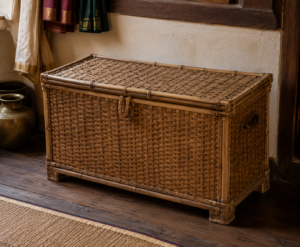
Biraali Potti is a traditional cane storage unit used for keeping clothes and household textiles. Made by skilled artisans from locally available cane, it was a practical storage article found in traditional homes in Kodagu.
The woven cane construction made it lightweight yet sturdy, while the natural gaps in the weave allowed air to circulate around the stored clothes. Its simple design reflected the traditional preference for durable, functional, and naturally made household articles.
Traditional Material
- Cane
Traditional Use
- Store clothes and garments
- Keep household textiles organised
- Protect and store clothing within the home
- Provide ventilated storage for fabrics
Before the widespread use of modern cupboards and plastic storage containers, cane-made storage units such as Biraali Potti formed an important part of traditional domestic life.
Craftsmanship
Biraali Potti represents the skill of traditional cane weaving. Flexible cane strips were carefully woven and shaped into a strong storage structure. The craftsmanship required knowledge of preparing, bending, joining, and weaving cane into a functional household object.
The use of locally available natural material also meant that the object could be made and maintained within the traditional community.
Why Biraali Potti Became Rare
The use of Biraali Potti declined as household storage practices changed. Wooden cupboards, steel almirahs, plastic containers, and modern modular storage systems gradually replaced traditional cane storage units.
Changing house designs and lifestyles further reduced the need for large woven storage articles. At the same time, fewer artisans continued practising traditional cane weaving as demand for handmade household products declined. The availability of inexpensive, factory-made alternatives accelerated this transition.
Today, Biraali Potti is rarely found in everyday household use and survives mainly as a heritage object representing the traditional homes and craftsmanship of Kodagu.
Heritage Significance
Biraali Potti is a simple but meaningful example of Kodagu’s traditional domestic material culture. It demonstrates how natural materials were transformed through skilled craftsmanship into durable objects suited to everyday life.
Its story also reflects a broader change in traditional households—from locally made, reusable natural products to modern manufactured storage systems.
Biraali Potti is preserved as a reminder of traditional cane craftsmanship, sustainable household practices, and the everyday life of earlier generations in Kodagu.
Virtual Modha goode
- Virtiual Modhagood – The virtual Museum of Kodava Heritage.
Comments
Leave a comment!Login for Post Comment
Last posts