

Andhol (ಆಂಧೋಲ್ ) — Ceremonial Palanquin
Contents
Andhol (ಆಂಧೋಲ್ ) — Ceremonial Palanquin
Overview
Andhol is a traditional palanquin-like structure used to carry a deity, revered person or honoured individual during ceremonial occasions and processions. Traditionally constructed from wood, bamboo and cane, it reflects the importance of honour, dignity and collective participation in Kodagu’s cultural traditions.
Traditional Use
Unlike the Funeral palanquin, this form of Andholwas carried by several people using long supporting poles. Its elevated seating structure allowed the person or sacred object being carried to remain clearly visible during a procession.It could form part of important religious, ceremonial or community occasions, where the person or deity being carried was accorded special respect.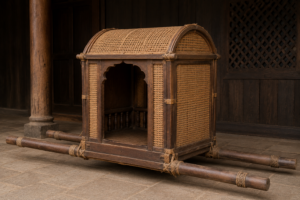
Design and Craftsmanship
A traditional Andhol consists of a sturdy wooden framework with woven cane or bamboo panels. The structure is supported by long poles extending from either side, allowing multiple bearers to carry it.
The curved or domed upper section, where present, provides an enclosed and dignified appearance. Traditional joinery, cane weaving and rope bindings demonstrate the craftsmanship required to construct such a structure.
Symbol of Honour
The Andhol was more than a mode of transportation. Being carried in one was a visible expression of honour, reverence and social importance.
When used for a deity, it became part of the sacred procession. When used for an honoured individual, it reflected the respect accorded to that person by the community.
Heritage Significance
The ceremonial Andhol represents the connection between traditional craftsmanship, community participation and ceremonial life in Kodagu.Its preservation helps us understand how earlier generations expressed respect and importance through objects that were both functional and deeply symbolic.
Virtual Modha goode
- To see many articles like these click on Virtiual Modhagood – The virtual Museum
Comments
Leave a comment!Login for Post Comment
Last posts