

Andhkode
Contents
Andhkode (ಅನ್ಧಕೊಡೆ)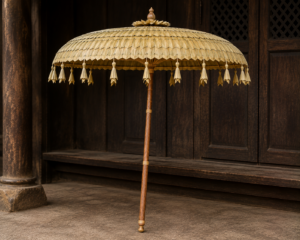
Overview
Andhkode is a traditional ceremonial umbrella-like object made from palm leaves, used in religious and ceremonial practices in Kodagu.It is traditionally carried or held over idols and sacred images during temple processions, symbolically providing shade and honour to the deity. The object reflects the importance of ceremonial presentation, respect and devotion in traditional Kodagu religious practices.
Traditional Use
During temple festivals and processions, sacred idols are carried through the temple grounds or surrounding streets. The Andhkode may be held above the idol as part of the ceremonial procession. Its presence adds dignity to the occasion and visually signifies the honour and reverence offered to the deity.
Materials and Craftsmanship
The traditional Andhkode is made primarily from palm leaves and natural materials available in the local environment.The leaves are carefully selected, shaped and woven or assembled to create an umbrella-like form. Its construction demonstrates the skill involved in transforming simple natural materials into objects of ceremonial importance.
Symbolism
An umbrella traditionally represents protection, dignity and honour. When placed above a sacred idol, the Andhkode carries a similar symbolic meaning.It is not merely a practical object for providing shade. Its use in a religious procession transforms it into a ceremonial expression of respect, devotion and sacred presence.
Place in Religious Traditions
Traditional religious festivals in Kodagu often combine ritual, music, processions and distinctive handmade objects. The Andhkode forms part of this visual and ceremonial heritage.
Objects such as these help distinguish traditional processions from ordinary movement of an idol and contribute to the solemnity and beauty of the occasion.
Heritage Significance
The Andhkode represents the connection between craftsmanship, natural materials and religious tradition.
Its palm-leaf construction also reflects an older practice of using locally available materials to create objects for important community occasions.
As traditional materials and methods become less common, preserving examples of the Andhkode helps document the ceremonial practices and craftsmanship associated with the religious heritage of Kodagu.
Museum Note
The Andhkode is preserved as a traditional palm-leaf ceremonial object, representing reverence, honour and the artistic use of natural materials in temple processions and religious traditions of Kodagu.
Virtual Modha goode
- Virtiual Modhagood – The virtual Museum of Kodava Heritage.
Comments
Leave a comment!Login for Post Comment
Last posts