

Adaph
Contents
Adaph (ಅಡಾಫ್)
Overview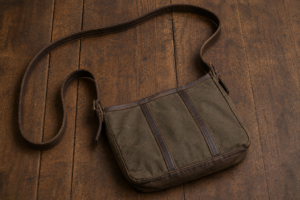
Adaph is a traditional shoulder bag associated with the everyday life and outdoor activities of the Kodavas of Kodagu. Designed to be carried across the shoulder, it provided a convenient way to carry personal belongings, tools and provisions while leaving both hands free for work.
Its practical design made it particularly useful during travel, agricultural activities, hunting and journeys through the countryside.
Traditional Use
The Adaph served as a compact personal carrying bag for items that were needed during the day. Depending on the occasion, it could hold food, small tools, personal belongings and other provisions.
Its shoulder-carrying design made it especially convenient for people who spent long periods away from home.
Uses of the Adaph
- Carrying personal belongings during travel
- Carrying food and provisions for a day’s work
- Keeping small agricultural or household tools
- Carrying essential items during hunting expeditions
- Transporting small necessities while walking through plantations and countryside
Design and Craftsmanship
The traditional Adaph was designed for durability and convenience. Its construction allowed it to rest securely across the shoulder while providing easy access to the contents.Depending on the period and maker, traditional examples could vary in material, size and decoration. The emphasis, however, remained on making a strong and practical bag capable of accompanying its owner during everyday work and travel.
Part of an Active Lifestyle
The Adaph reflects a period when much of daily life involved walking, farming, working in plantations and travelling through the hills and forests of Kodagu.
For a person working outdoors, carrying provisions and tools in a shoulder bag was more practical than carrying a conventional hand-held container. The Adaph therefore became a useful companion for both work and journeys.
Heritage Significance
The Adaph is a simple object, but it provides an important glimpse into the mobility and working life of earlier generations of Kodavas.
It represents the practical ingenuity of traditional material culture—an everyday object designed around the needs of people who travelled, worked outdoors and often spent long hours away from their homes.
Today, an Adaph preserved in an old Kodava household or museum serves as a reminder of the self-reliant, active and outdoor-oriented lifestyle of earlier generations.
Virtual Modha goode
- Virtiual Modhagood – The virtual Museum of Kodava Heritage.
Comments
Leave a comment!Login for Post Comment
Last posts