

Adike Kattari
Contents
Adike Kattari (ಅಡಿಕೆ ಕಟ್ಟಾರಿ)
Overview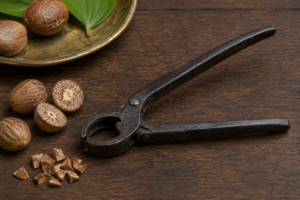
Adike Kattari is a traditional hand tool used for cutting areca nuts (adike). The tool was an important household implement in traditional Kodava homes, where areca nut and betel leaf formed an integral part of everyday social life and hospitality.More than a simple cutting implement, the Adike Kattari reflects the customs surrounding the preparation and serving of adike and paan to family members, guests and visitors.
Traditional Use
The Adike Kattari was specially designed to cut whole or dried areca nuts into smaller pieces. Its compact form made it convenient to keep in the household and use whenever areca nut was prepared for consumption.
In traditional homes, areca nut was commonly offered along with betel leaf as a gesture of hospitality. Preparing it was often part of receiving guests and sharing conversation.
Areca Nut in Kodava Life
Areca nut has long been associated with social customs across Kodagu and the wider region. In a traditional Kodava household, offering adike to a guest could form part of the customary welcome after a meal or during a social gathering.The preparation and serving of areca nut therefore belonged to the wider culture of hospitality, social interaction and community life.
Design and Craftsmanship
The Adike Kattari is a specialised cutting tool, typically consisting of a sturdy cutting mechanism capable of handling the hard areca nut.
Traditional examples may display simple but effective craftsmanship, with the tool designed primarily for durability and repeated household use. Some older implements may also carry decorative details reflecting the craftsmanship of the period in which they were made.
An Everyday Household Object
Unlike objects reserved for special occasions, the Adike Kattari belonged to the category of everyday household implements. It could be kept alongside other kitchen and serving utensils and brought out whenever areca nut was prepared.Its presence in an old Kodava home provides a small but meaningful glimpse into the routines of earlier generations.
Heritage Significance
The Adike Kattari represents the connection between traditional food practices, hospitality and material culture in Kodagu.
Objects such as this are important to a heritage museum because they document not only the tools used by earlier generations, but also the customs and social practices surrounding them.
Today, the Adike Kattari stands as a reminder of a time when even a simple act such as preparing areca nut was closely connected with welcome, friendship, conversation and community.
Virtual Modha goode
- Virtiual Modhagood – The virtual Museum of Kodava Heritage.
Comments
Leave a comment!Login for Post Comment
Last posts