

Kodira Ainmane
Contents
Kodira Ainmane
Location
Kodira Ainmane is situated in the picturesque village of Arapatt, in Kodagu district, Karnataka. Nestled amidst the rolling hills, coffee plantations, and paddy fields characteristic of the region, the ainmane occupies a traditional Kodava settlement where the ancestral home continues to serve as the cultural and ceremonial centre of the Kodira Okka.
The ancestral shrine (Kaimada) is located on the same side of the approach road leading to the ainmane, following the customary Kodava practice of establishing the shrine close to the ancestral residence. This allows members of the Okka to offer prayers to their ancestors before entering the ainmane during important ceremonies and family gatherings.
Architecture and Features
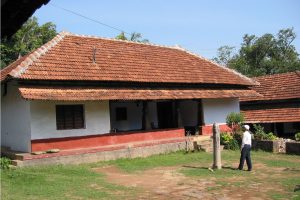
Estimated to be over 200 years old, Kodira Ainmane is a fine example of traditional Kodava domestic architecture. Built using locally available timber, stone, lime mortar, and clay tiles, the house reflects the practical yet elegant style of ancestral homes found throughout Kodagu.
The ainmane consists of seven rooms, arranged in the traditional layout that accommodated several generations of the family under one roof. Although modest in size compared to some of the larger Kodava ancestral houses, it preserves many characteristic architectural elements.
Among its notable features are:
- Beautifully carved wooden doors displaying traditional Kodava craftsmanship.
- Elegant window frames with simple yet refined decorative carvings.
- A well-crafted Aimara, the continuous wooden bench running along the verandah, which traditionally served as a place for elders to receive visitors, conduct family discussions, and participate in ceremonies.
- Traditional timber pillars and sloping tiled roof designed to withstand Kodagu’s heavy monsoon rainfall.
- A spacious forecourt that would have served as the venue for gatherings during festivals, marriages, and ancestral rituals.
The restrained wood carvings found throughout the ainmane reflect the Kodava preference for functionality combined with understated elegance rather than elaborate ornamentation.
Kaimada
The Kaimada, or ancestral shrine, stands on the same side of the road leading to the ainmane, making it an integral part of the ancestral complex.
Like most Kodava Kaimadas, it serves as the sacred place where the spirits of the founding ancestors (Guru Karana) and subsequent generations are revered. Family members gather here to perform Karana Kodupo, offer prayers, and seek the blessings of their ancestors during important occasions such as weddings, naming ceremonies, Puthari, Kaveri Sankramana, and annual Okka gatherings.
The location of the Kaimada close to the ainmane symbolises the enduring presence of the ancestors as guardians of the family, its traditions, and its ancestral lands.
Historical Timeline
- Age: More than 200 years
- Period of Construction: Estimated to have been built during the late 18th or early 19th century.
- Present Status: Continues to stand as the ancestral home of the Kodira Okka, preserving the architectural, cultural, and spiritual traditions of the family.
Heritage Significance
Kodira Ainmane represents more than an ancestral residence—it embodies the continuity of the Kodira Okka, preserving generations of family history, customs, and ancestral worship. The presence of the ainmane alongside its Kaimada illustrates the unique Kodava tradition in which the ancestral home and the shrine together form the spiritual and social nucleus of the clan.
Today, the ainmane remains a valuable example of Kodava architectural heritage and stands as a reminder of the community’s enduring respect for ancestry, family unity, and cultural identity.
Comments
Leave a comment!Login for Post Comment
Last posts