

Komb-aat
Contents
Komb-aat (ಕೊಂಬಾಟ್)
The Dance of the Deer 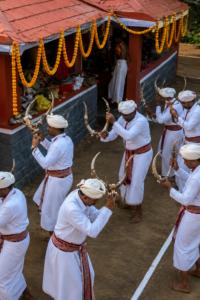
Komb-aat is a traditional religious dance performed by Kodava men, particularly during temple ceremonies and other important ritual occasions. The name comes from Kombu, meaning horn, and the most distinctive feature of the dance is the use of deer horns.
The horns traditionally represent those of the Krishna Mruga, the spotted deer that occupies an important place in Kodava oral tradition. The dancers carry the horns and perform rhythmic movements accompanied by traditional wind instruments and percussion.
A Story of Coexistence
According to Kodava oral tradition, Komb-aat carries a deeper meaning than the performance itself. It recalls a time when humans and the animals of Kodagu were believed to have lived together in harmony.The dance is remembered as a symbolic meeting between the deer and the human before the deity. Through the performance, the human community is understood to be assuring the deity that it will respect the animals of the land and will not harm them without necessity.
In this interpretation, the deer is not merely represented as an animal. It becomes a symbol of the wider natural world with which the Kodava community shared its landscape.Komb-aat therefore represents an idea that remains deeply relevant to the cultural memory of Kodagu: humans are part of nature, rather than separate from it.
The Horn as a Symbol
The deer horn gives the dance its identity. Held by the dancers and moved rhythmically with the music, it transforms the performer into a symbolic representation of the animal.The movement of the dancers, the sound of the instruments and the curved form of the horns come together to create a performance that is both ceremonial and powerful.
Part of a Larger Tradition
Komb-aat is traditionally understood alongside Peelyaaat and Chowriya-aat, where each dance uses a different natural or ceremonial object.
While Komb-aat uses the deer horn, Peelya-aat uses peacock feathers, and the older form associated with Chowriya-aat is remembered as having used branches or leafy twigs.Together, these performances preserve different aspects of the relationship between the Kodava community, nature and the sacred.
A Living Tradition
Komb-aat is not simply a performance preserved from the past. It remains part of Kodava ceremonial culture and continues to be associated with religious occasions.Its significance lies not only in the dance, the music or the distinctive horns, but in the cultural memory carried through them—a memory of respect for the land, reverence for the divine and coexistence with the animals, birds & humans of Kodagu.
Comments
Leave a comment!Login for Post Comment
Last posts